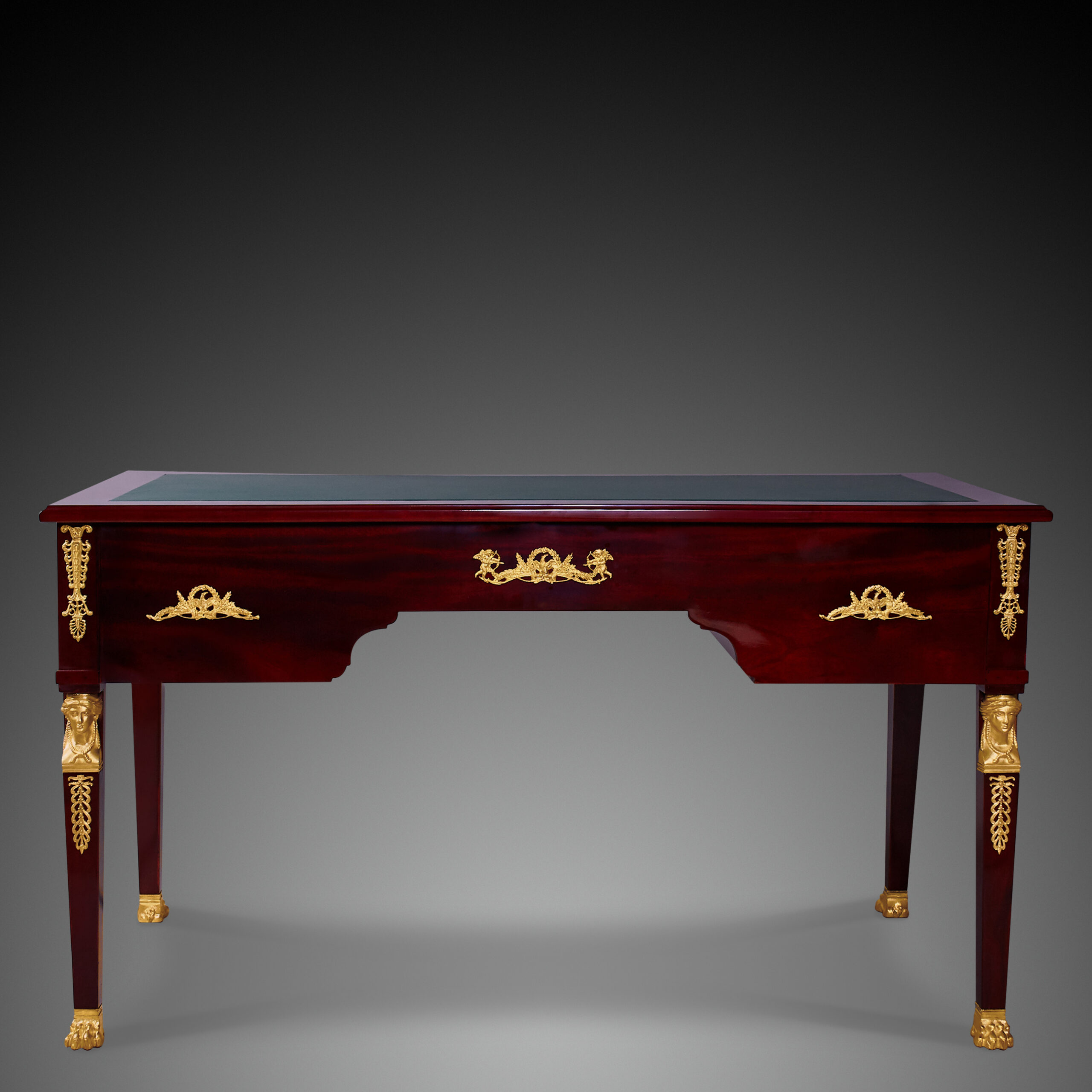
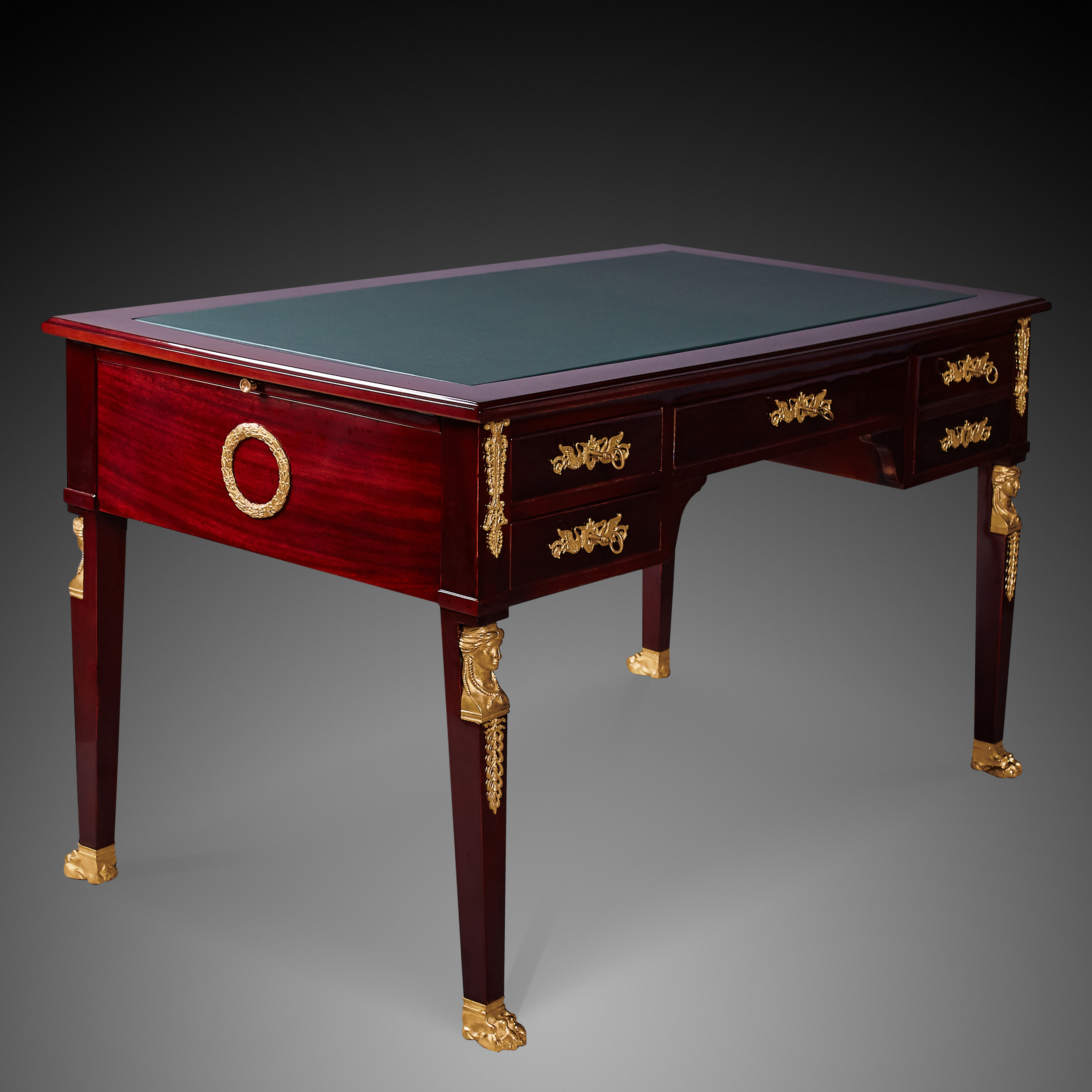
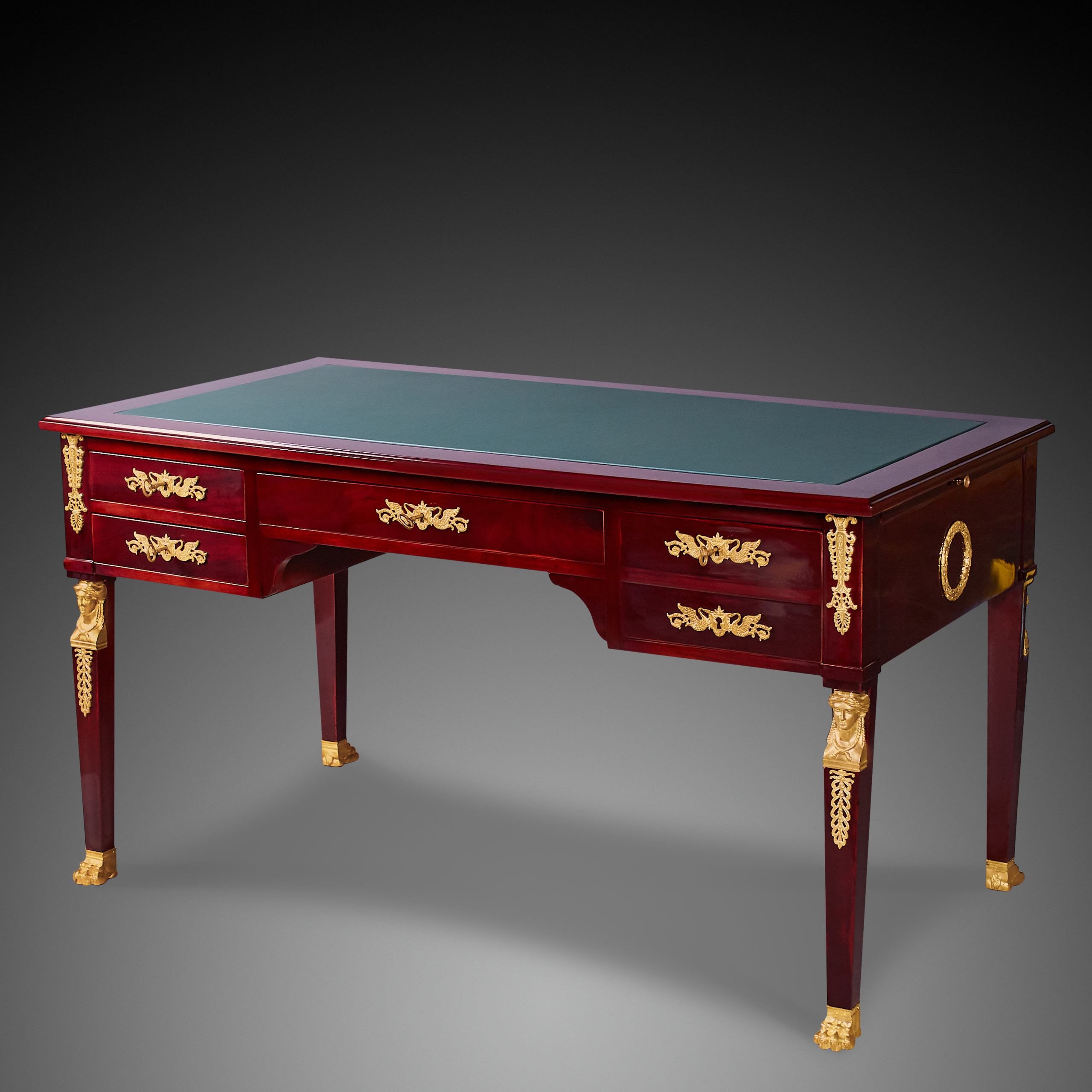
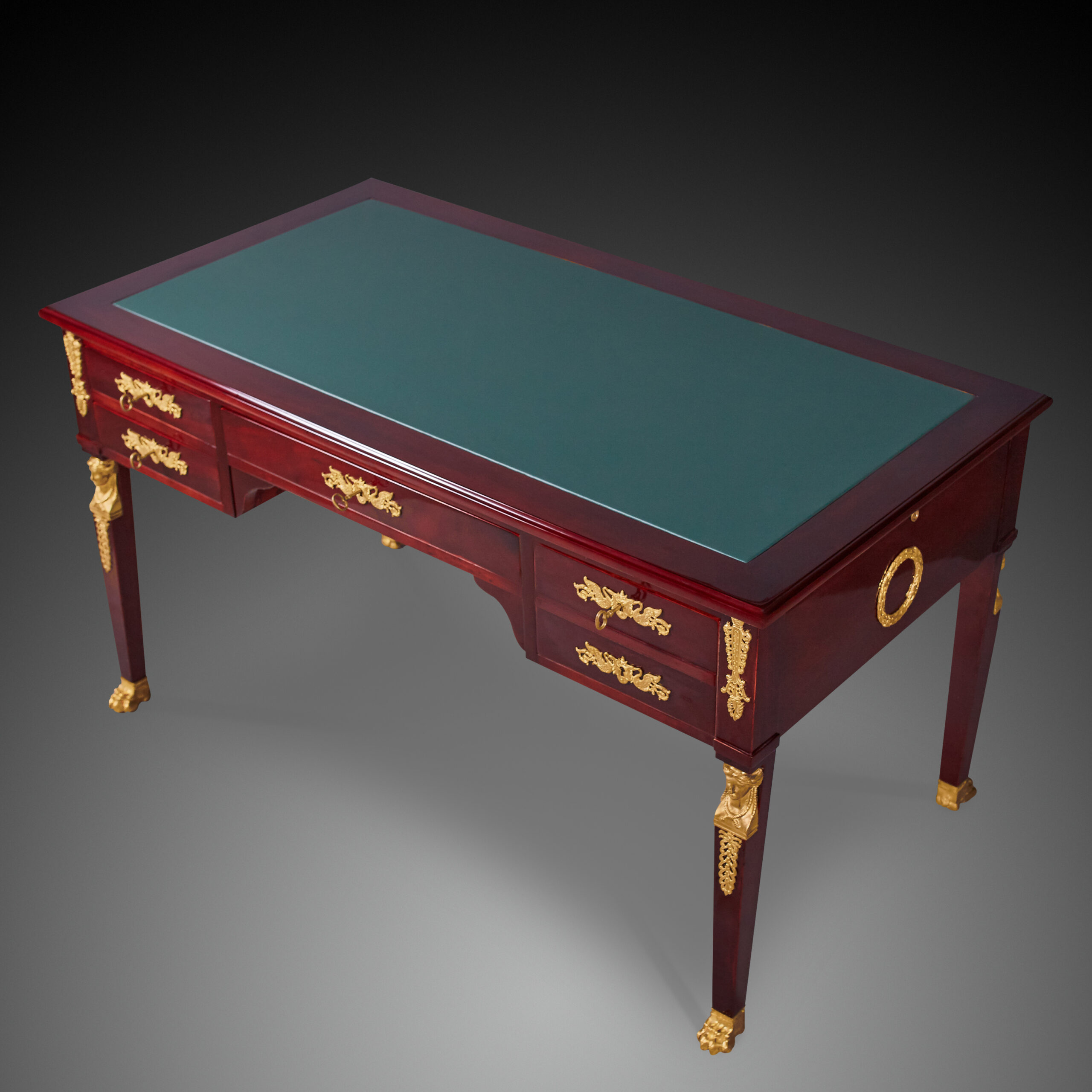
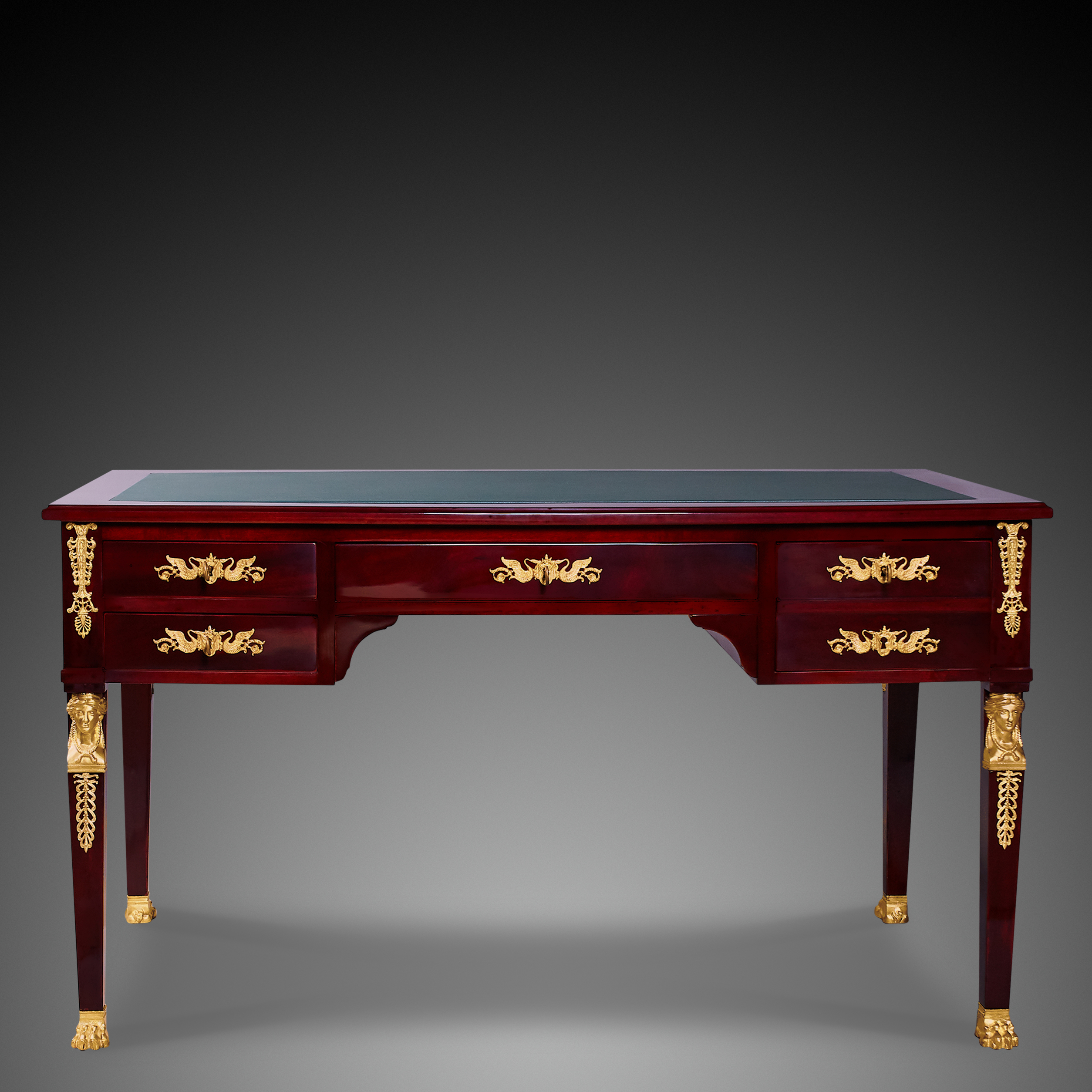
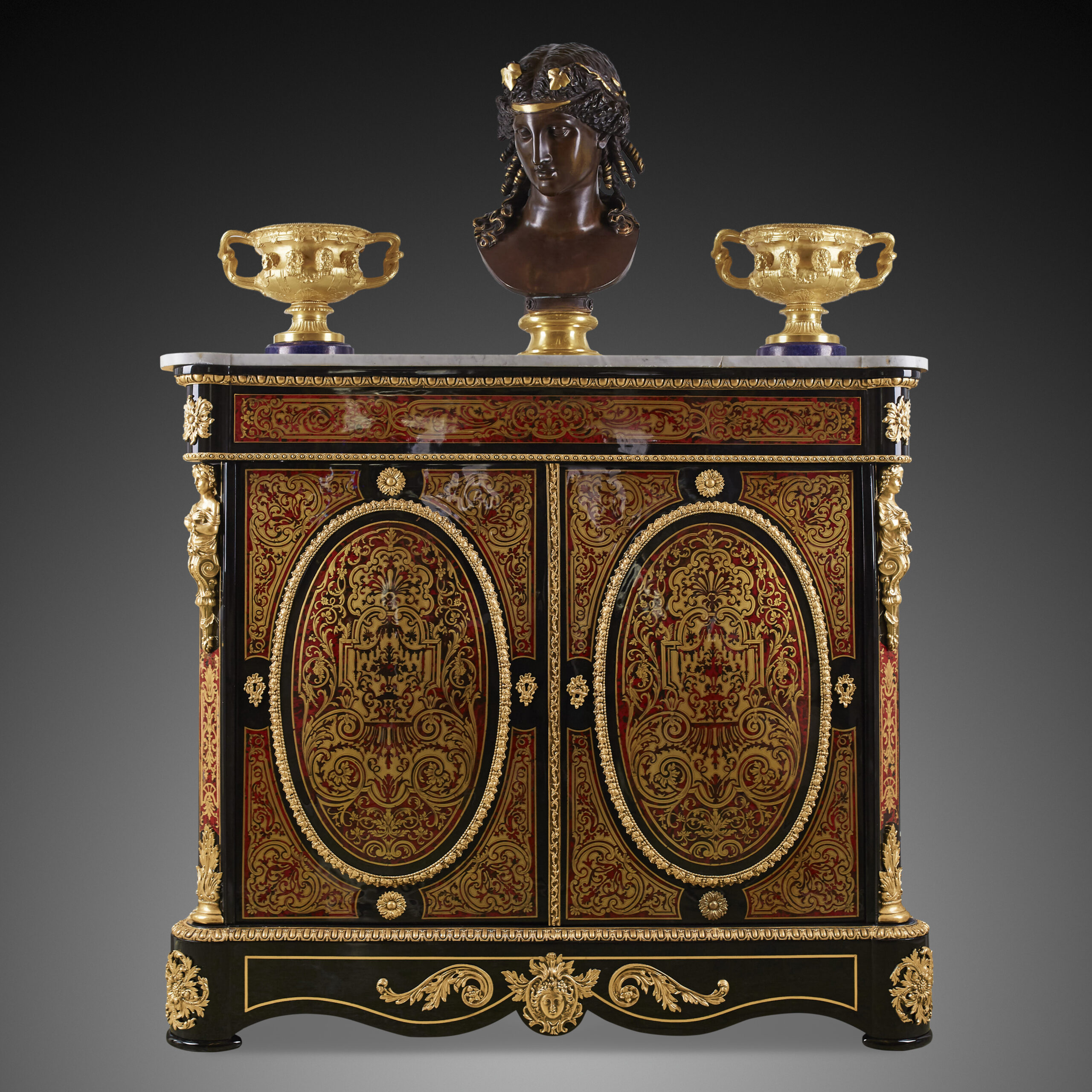
This exceptional French bureau plat is a quintessential example of the Empire style, dating from the early 19th century (circa 1810–1820), and represents one of the most refined expressions of Neoclassical furniture produced during the Napoleonic era.
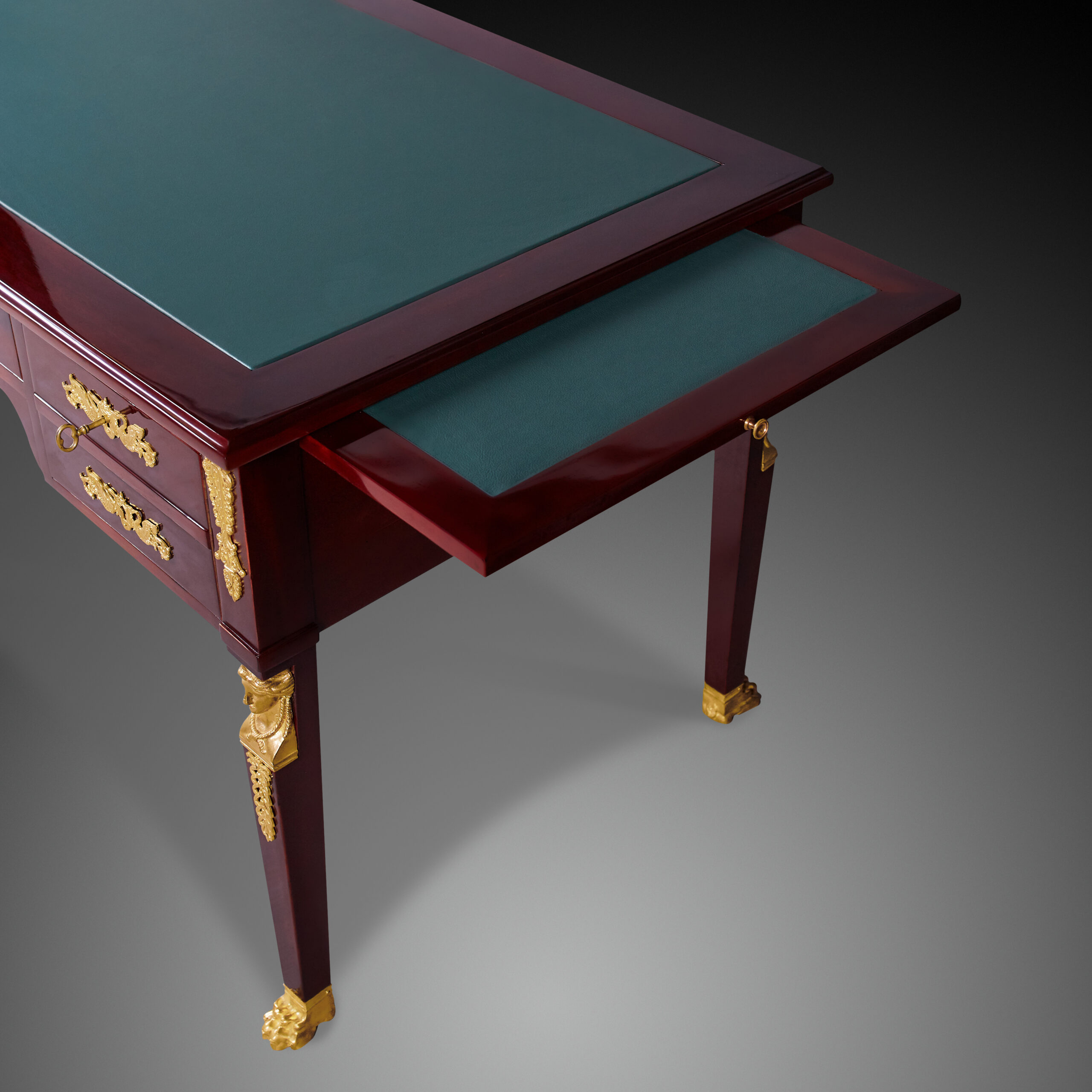
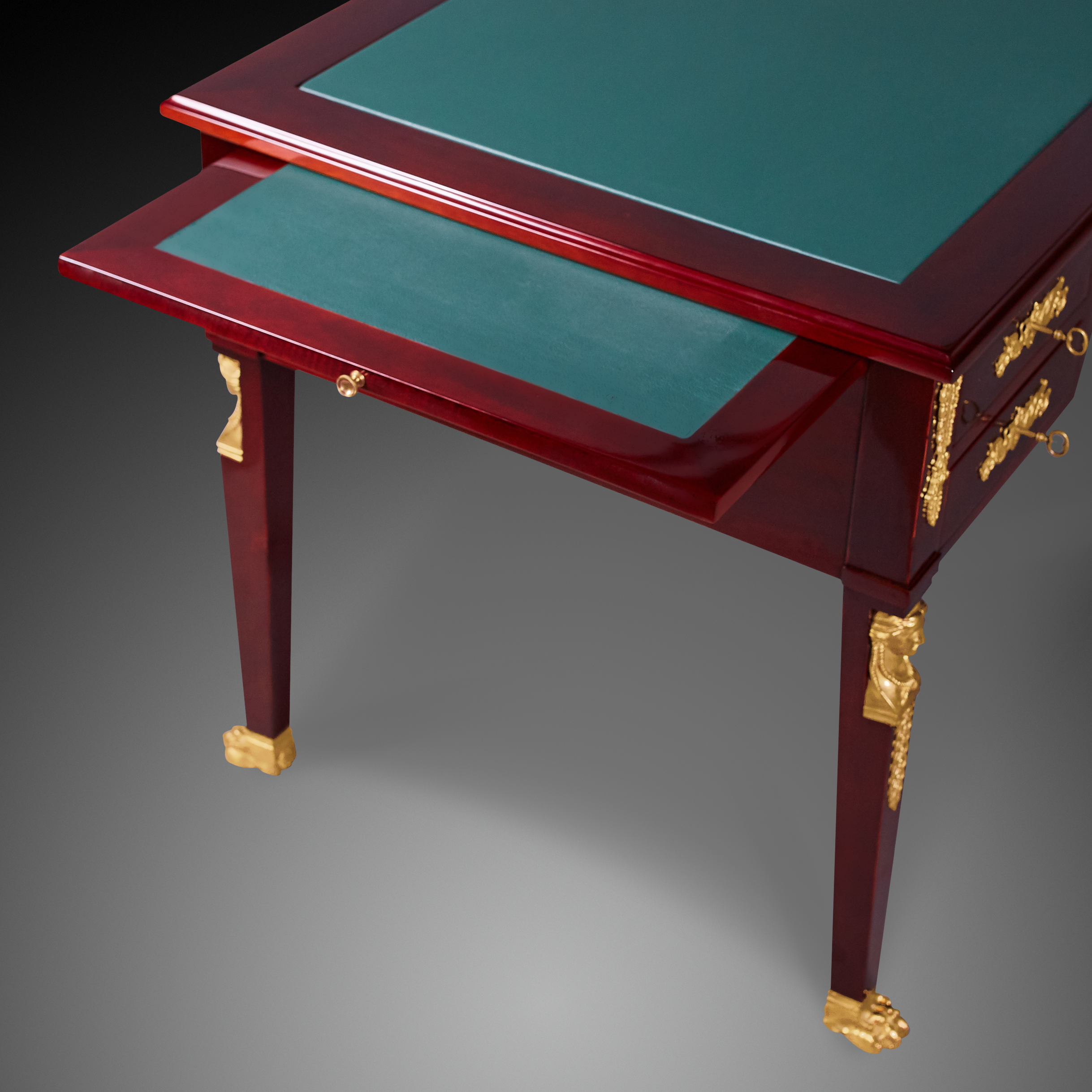
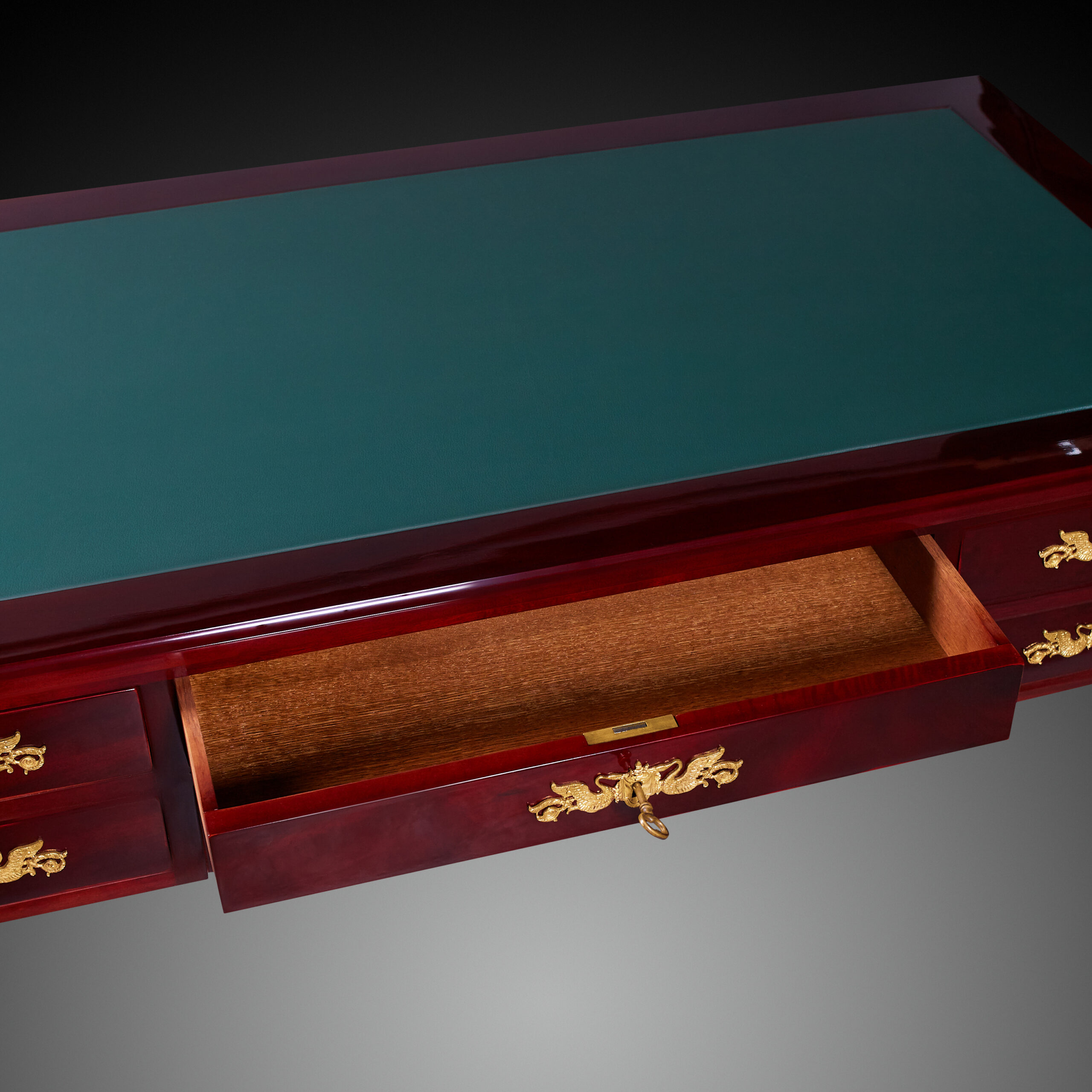
The desk is expertly crafted from highly figured mahogany, prized for its deep, rich colour and exceptional grain, finished with a lustrous French polish. Its architectural form is monumental yet perfectly balanced: a substantial rectilinear top supported by two pedestals flanking a recessed central kneehole for comfortable use. The desktop is inset with a fine black leather writing surface framed by a moulded wood border.
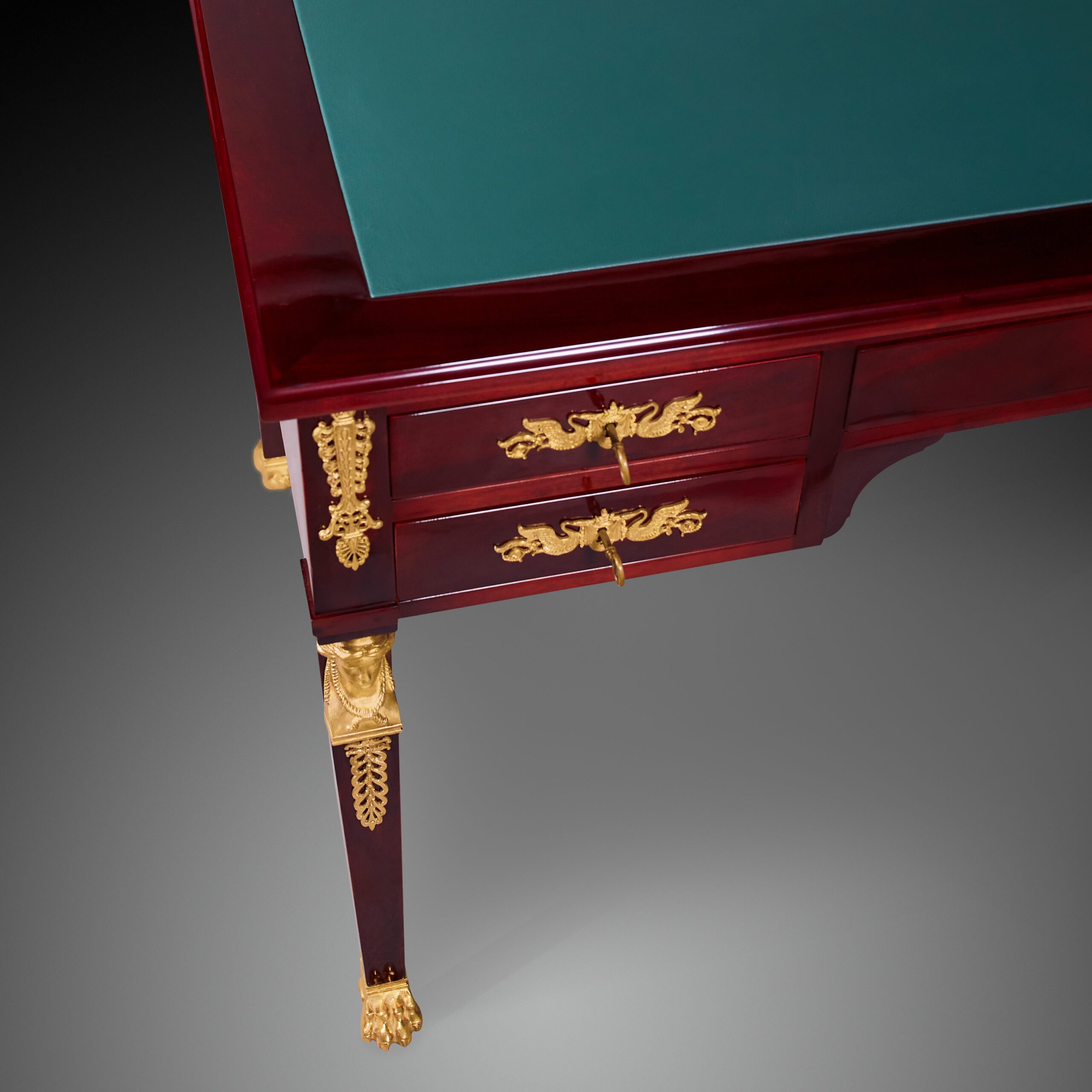
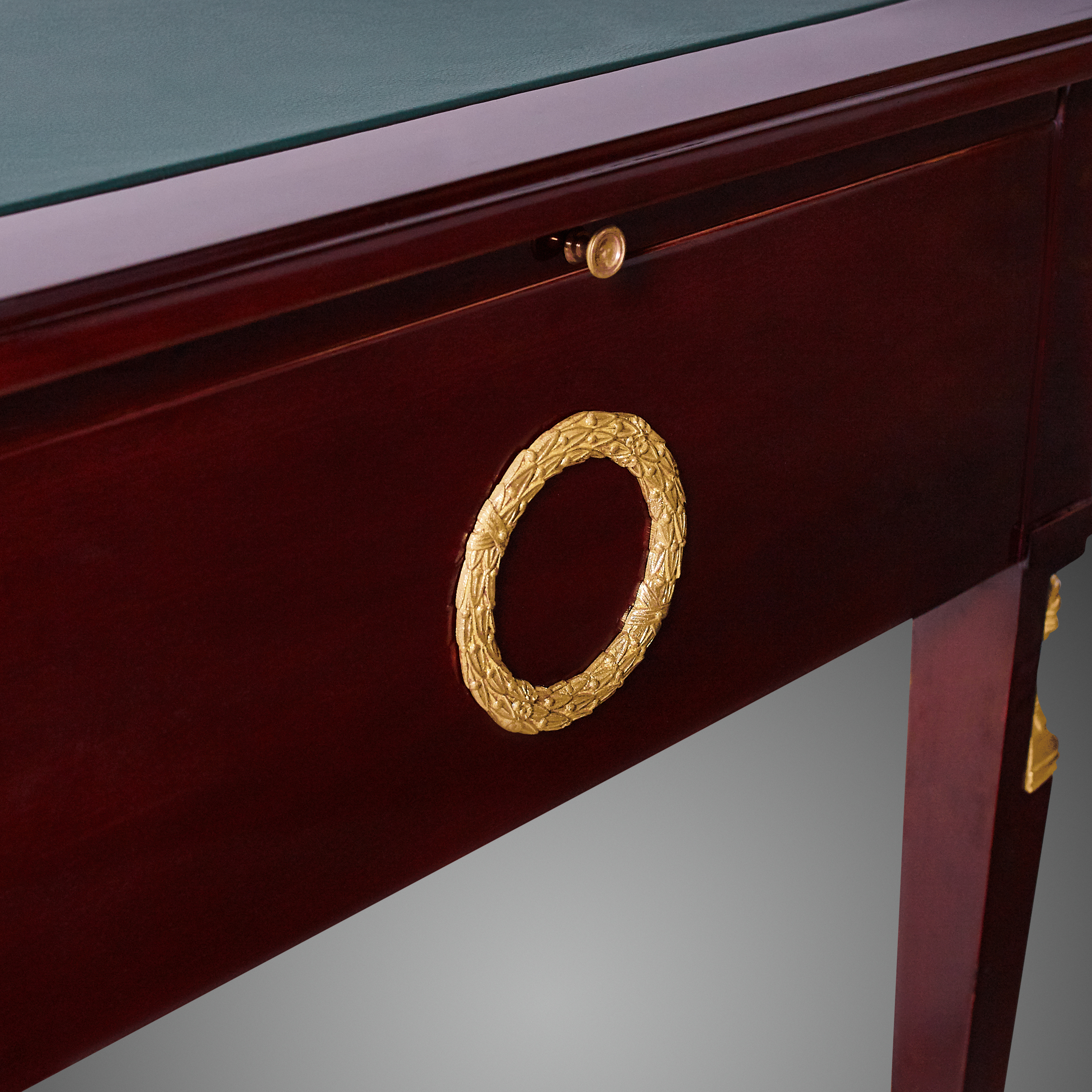
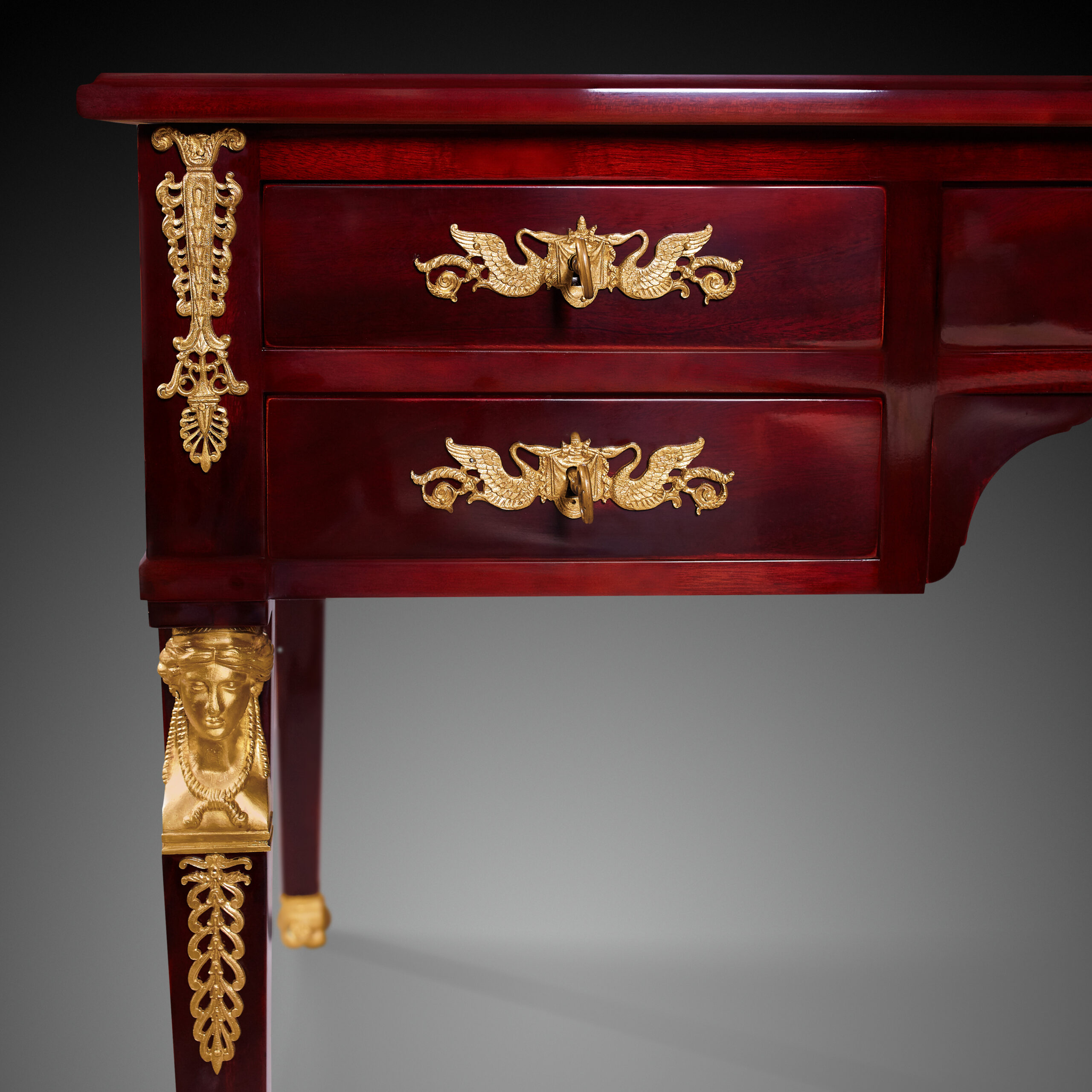
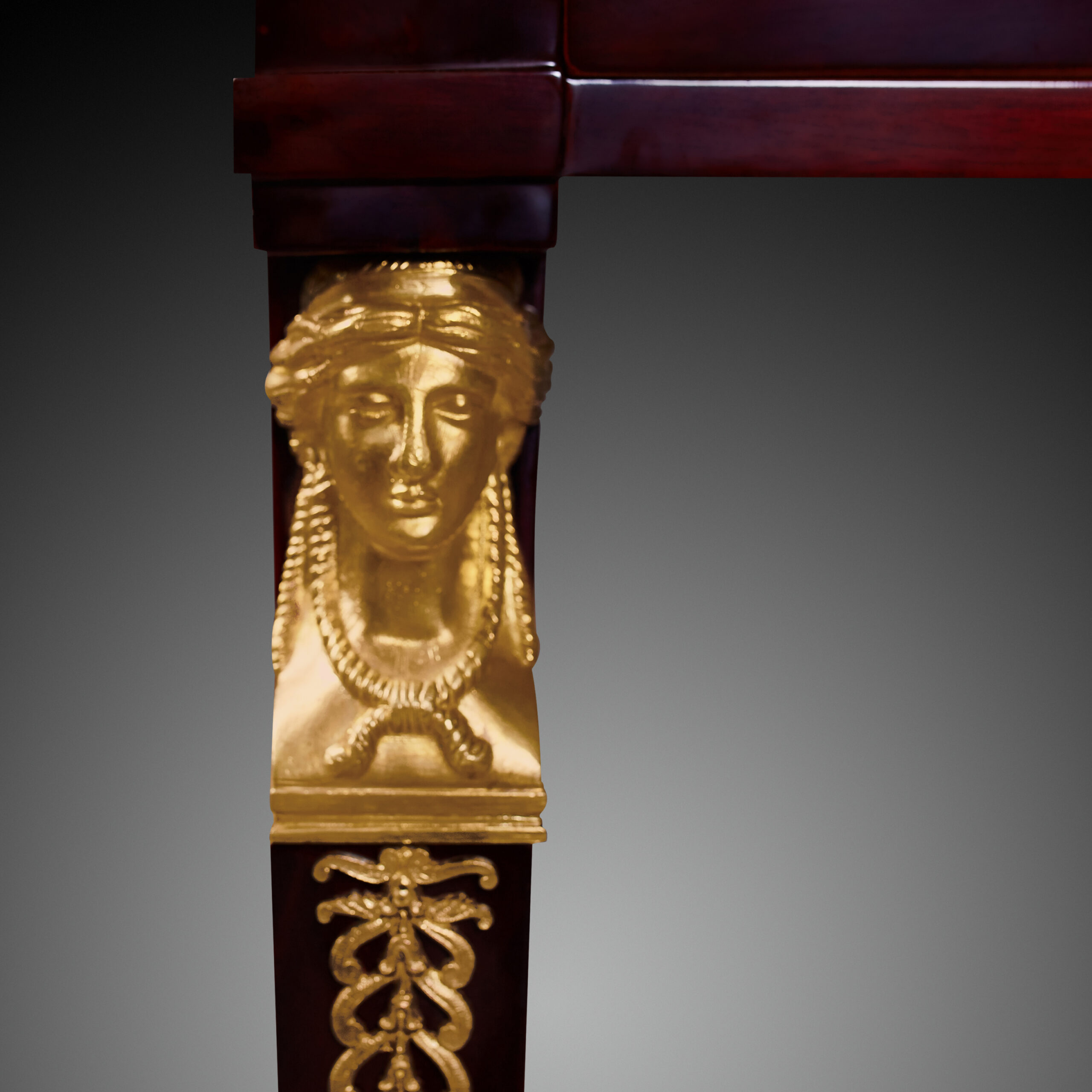
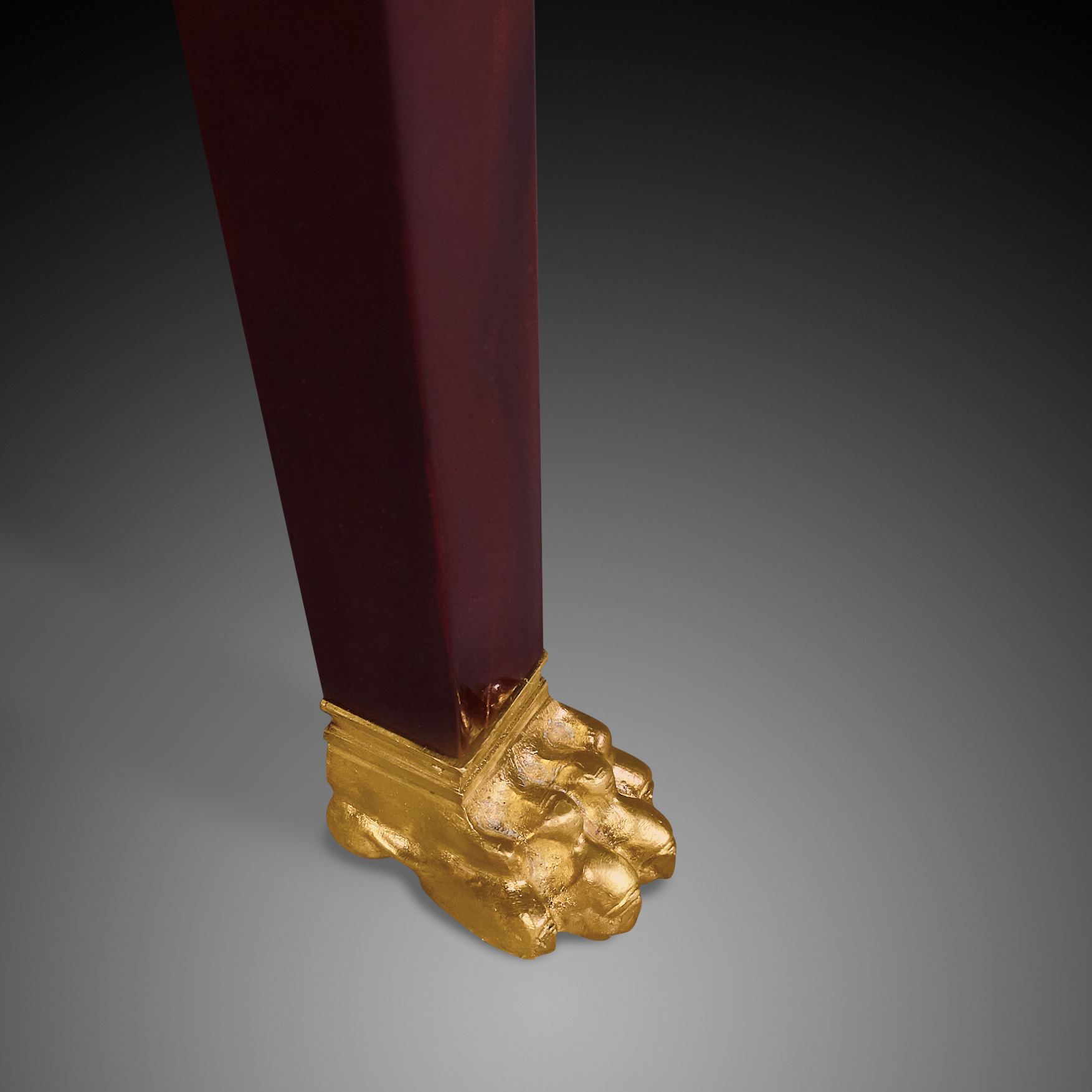
The piece is lavishly embellished with finely cast and fire-gilt bronze (ormolu) mounts of the highest quality. The front supports are adorned with stylized ormolu caryatids in the form of female busts, a direct reference to ancient Greco-Roman architectural forms. The central frieze drawer features a prominent ormolu medallion centred on a classical laurel wreath, while the drawer fronts are decorated with symmetrically arranged gilt-bronze foliate scrolls and rosettes. The four feet terminate in substantial lion’s-paw sabots, a powerful motif borrowed from ancient Egyptian and Roman art.
This bureau plat perfectly embodies the spirit of the Empire under Napoleon Bonaparte. Emerging after the French Revolution, the Empire style was deliberately created to project the power, order, and grandeur of the new Imperial regime. It drew heavily from ancient Greco-Roman and Egyptian sources, inspired in particular by Napoleon’s Egyptian campaign (1798–1799) and the wave of archaeological discoveries that followed. Severe rectilinear forms, heavy proportions, classical columns, caryatids, laurel wreaths, and lion paws replaced the delicate curves of the preceding Louis XVI style, creating furniture that felt both monumental and timeless.
Although produced in the early 19th century, pieces of this quality continued to be highly prized and occasionally revived during the Second Empire under Napoleon III, when the desire to reconnect with the glories of the Napoleonic past was strong. This desk stands as a perfect embodiment of that imperial ideal-combining bold architectural presence with refined craftsmanship and rich materials.
When placed in a study, salon, or formal room, it offers both practical workspace and a commanding decorative presence. The warm mahogany, crisp gilt bronze mounts, and classical proportions create a dignified and timeless elegance that is quintessentially Empire.
This is a beautiful and authentic example of early 19th-century French furniture, where technical mastery meets historical revival and imperial grandeur. Its monumental scale, high-quality materials, and fine ormolu mounts make it a highly desirable addition to any serious collection of Empire decorative arts.