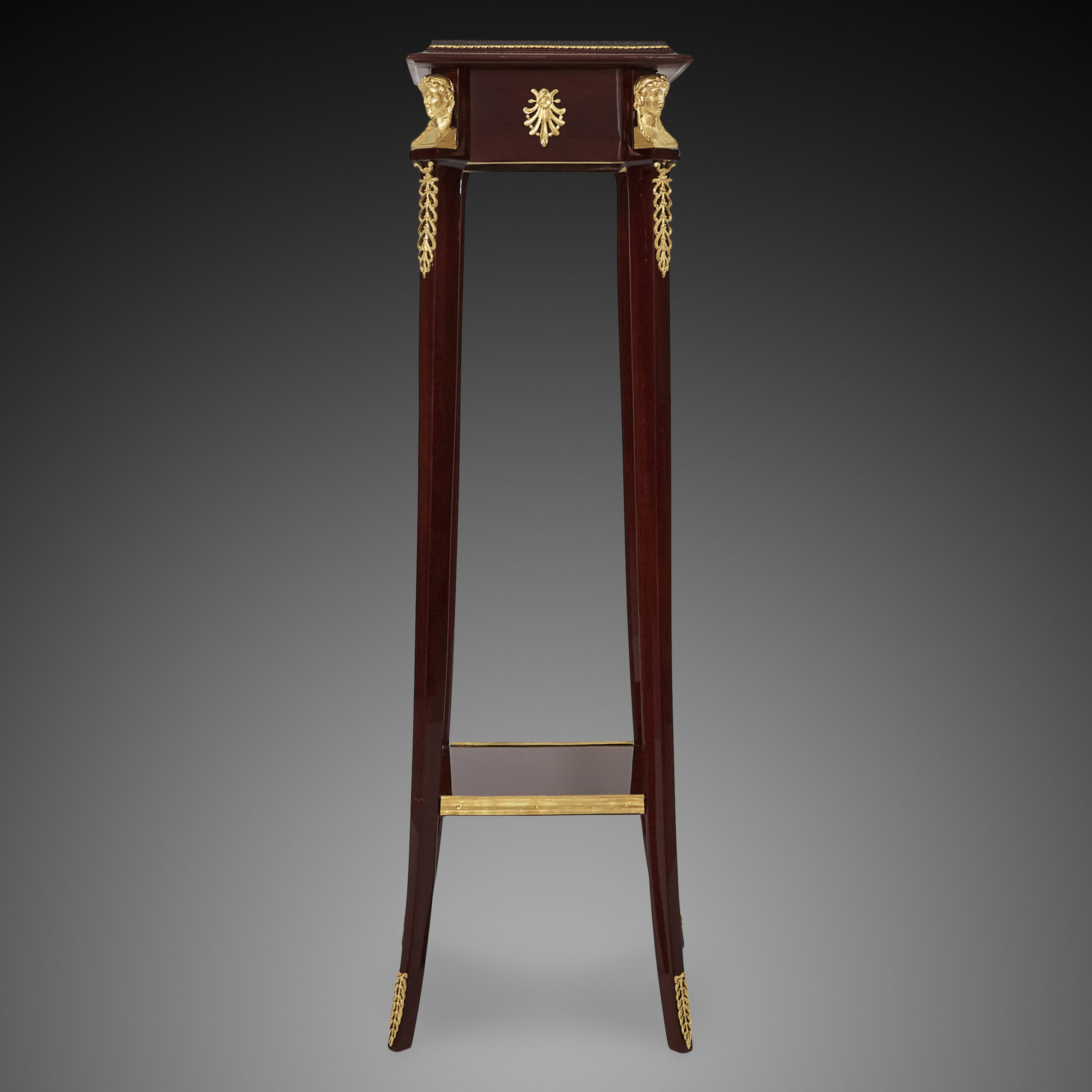
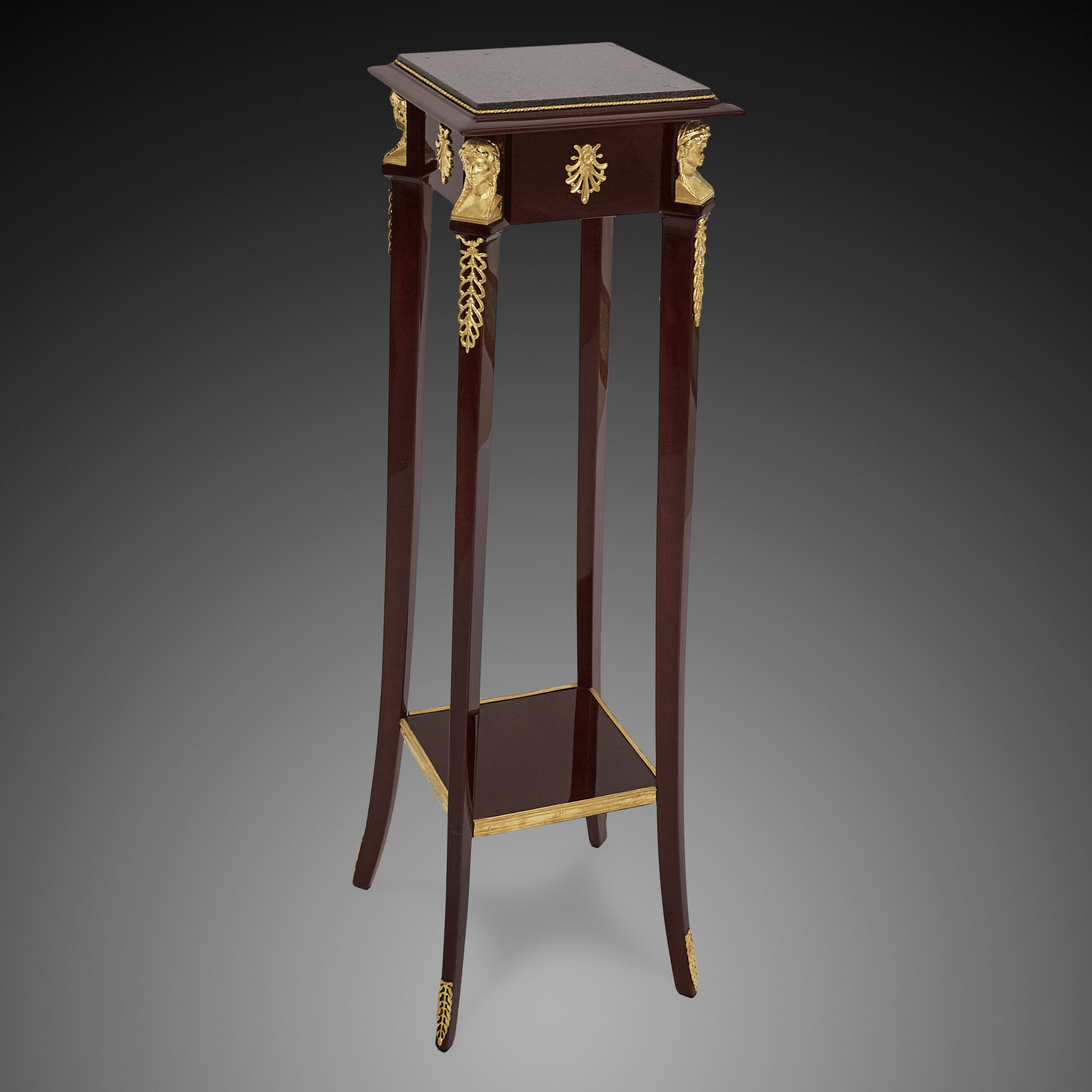
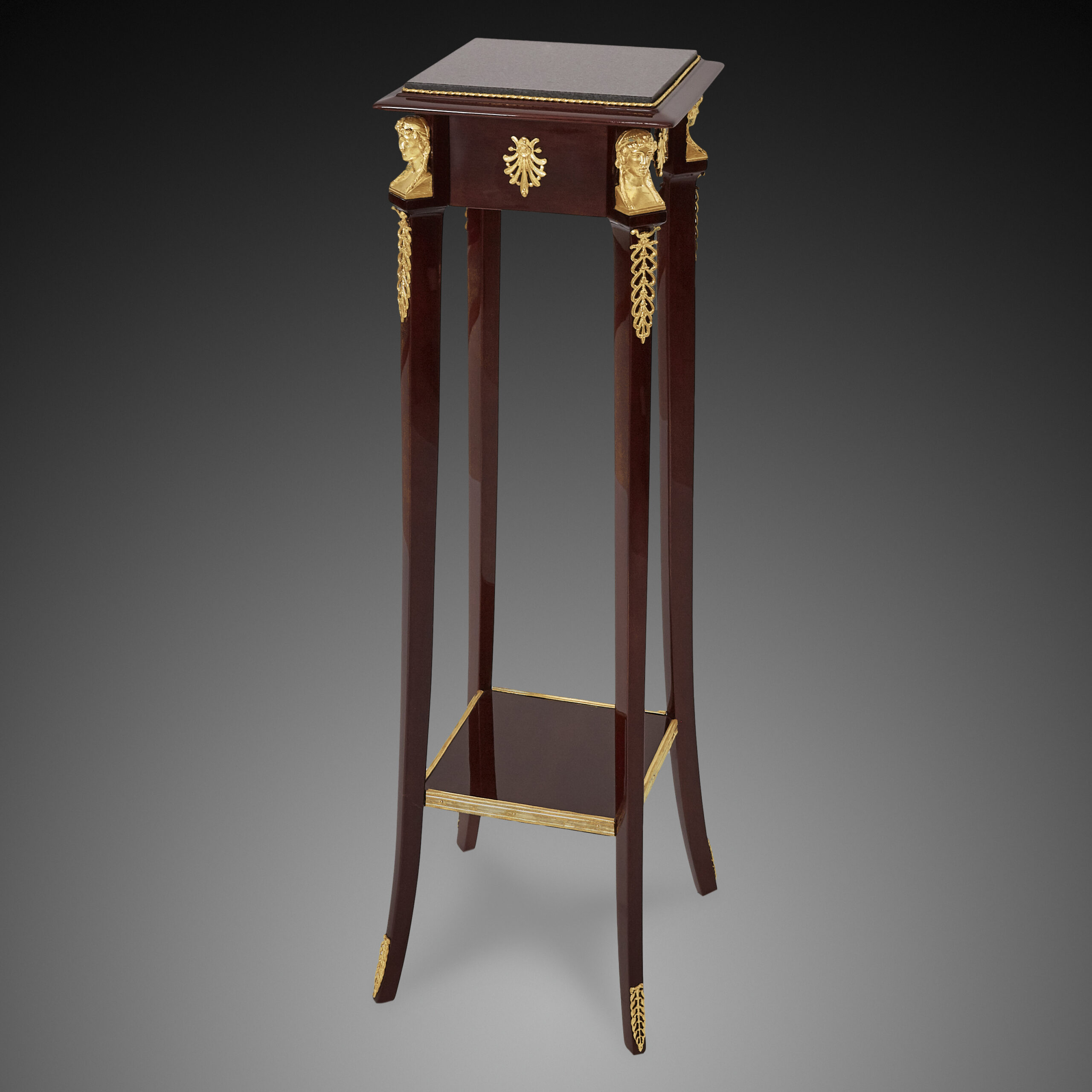
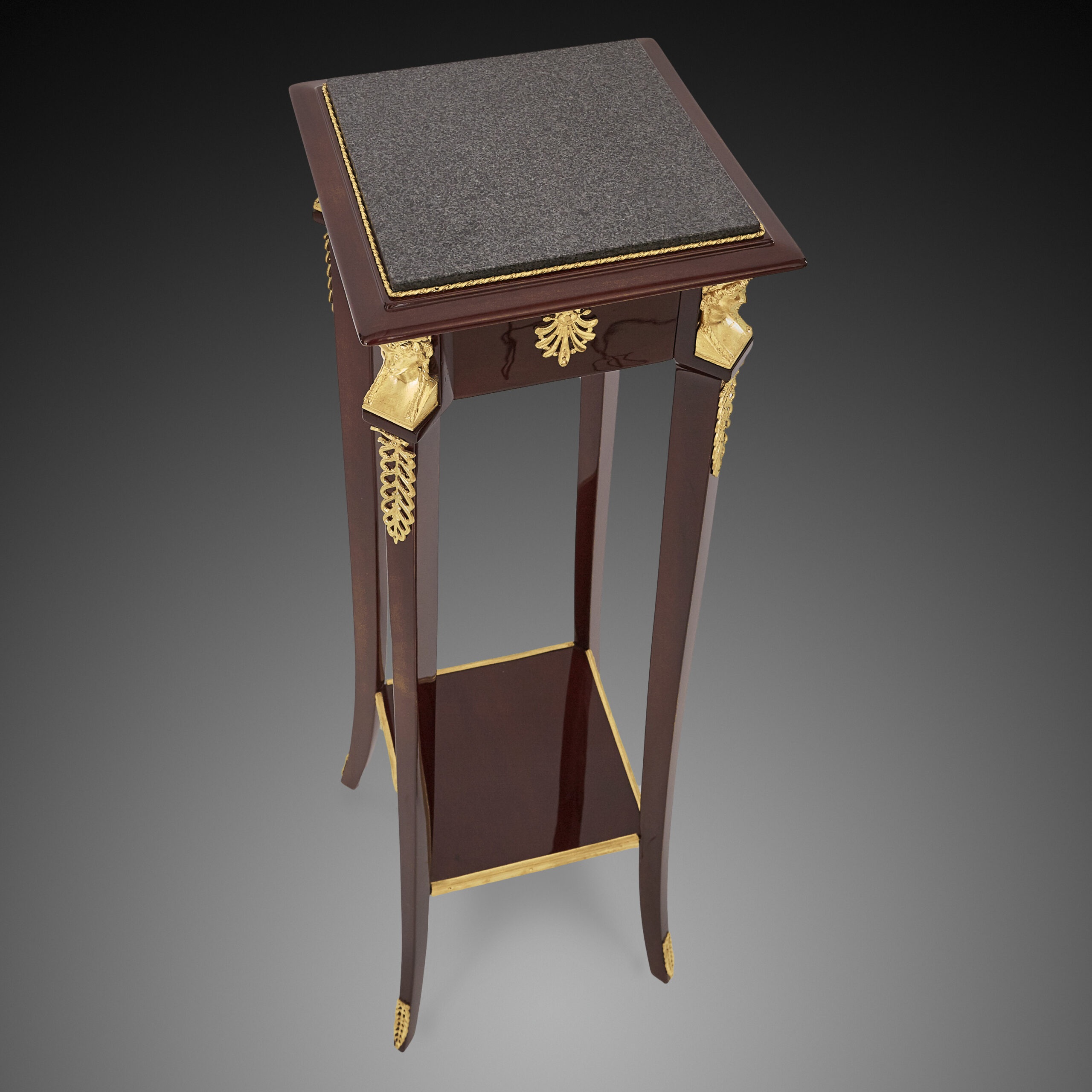
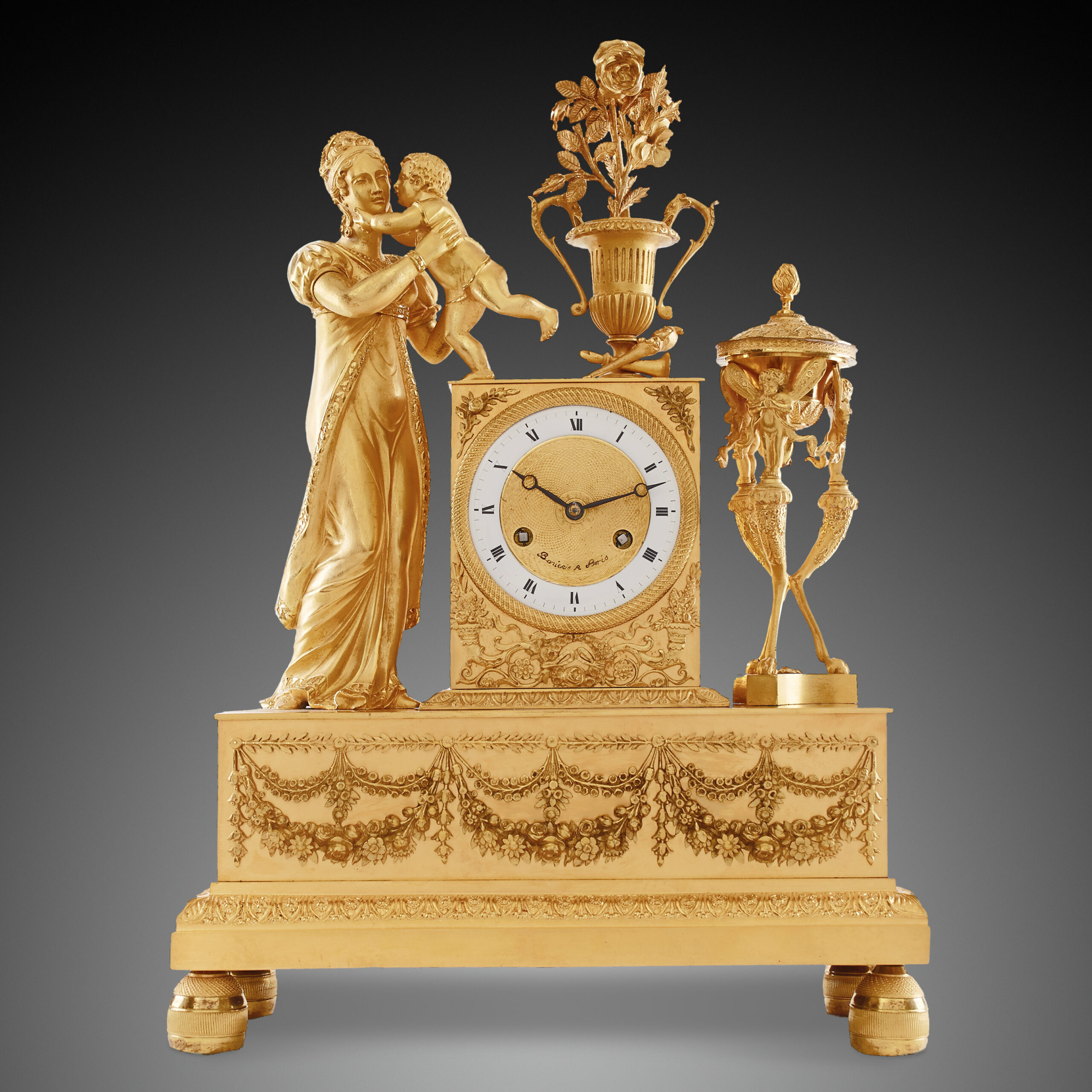
This magnificent French Empire pedestal is a fine and refined example of the pure Neoclassical style, dating from circa 1810–1820.
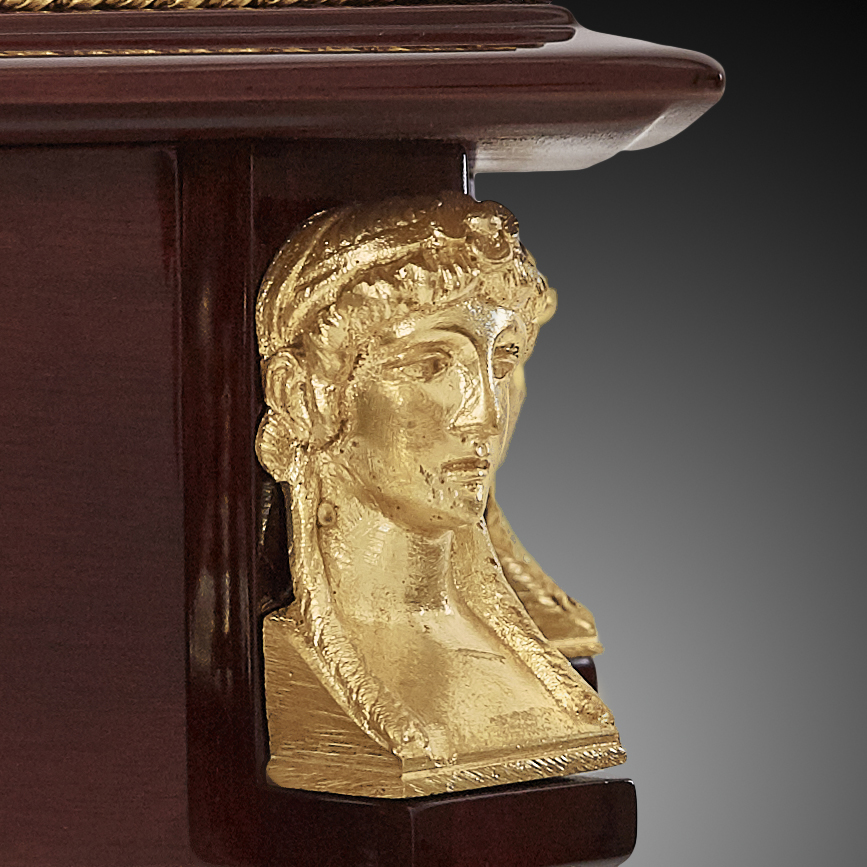
The piece is executed in rich mahogany with beautifully figured veneers. The square top is framed by a delicate gilt bronze gallery with a repeating Greek key motif. Below the top, a small drawer is discreetly integrated into the frieze and adorned with a central gilt bronze anthemion mount. The corners are accentuated by finely chased gilt bronze female masks, probably representing the Muses or classical genii, which add a touch of sculptural refinement.
The four tapering legs are of square section with a gentle outward curve and terminate in elegant gilt bronze sabots decorated with laurel leaves. A simple gilt bronze stretcher connects the legs at the lower level, maintaining the clean architectural lines so characteristic of the Empire period.
This pedestal perfectly embodies the spirit of the Empire under Napoleon Bonaparte. After the Revolution, French designers deliberately returned to the grandeur and order of ancient Rome and Greece. The use of noble mahogany, classical motifs such as the Greek key and anthemion, and restrained yet high-quality gilt bronze mounts was intended to express imperial power, permanence, and refined taste.
Such pedestals were highly prized and frequently used in pairs or groups in salons, libraries, or galleries to support clocks, candelabra, busts, or fine porcelain. Their slender, architectural form allowed them to enhance a room without overpowering it.
The combination of the warm, rich mahogany, the crisp gilt bronze details, and the clean proportions gives this pedestal a quiet dignity and timeless elegance. It is a perfect example of Empire furniture at its most refined -where technical precision meets classical purity and understated luxury.
This is a beautiful and authentic piece of early 19th-century French decorative arts that would sit harmoniously in any Neoclassical interior or serious collection of Empire furniture.