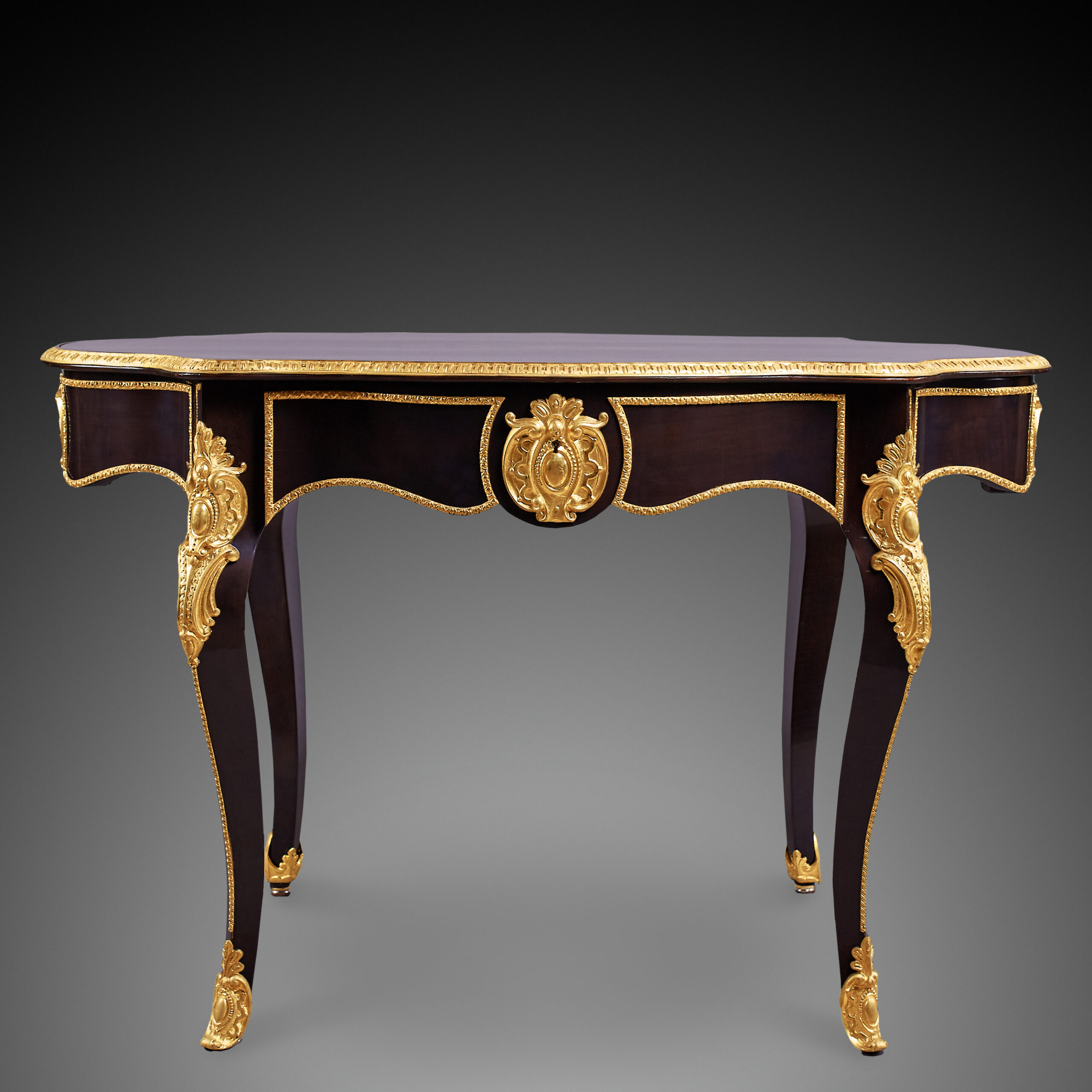
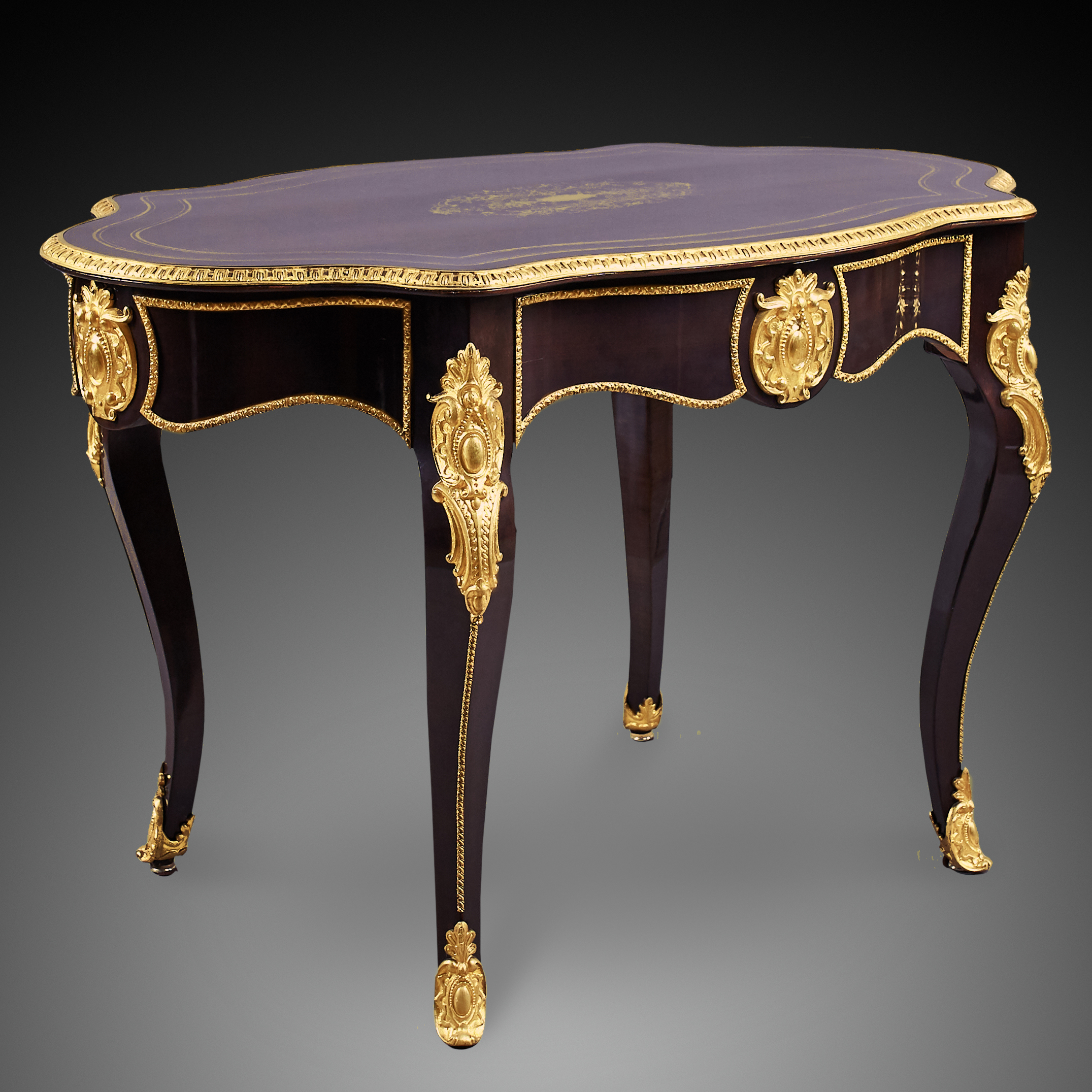
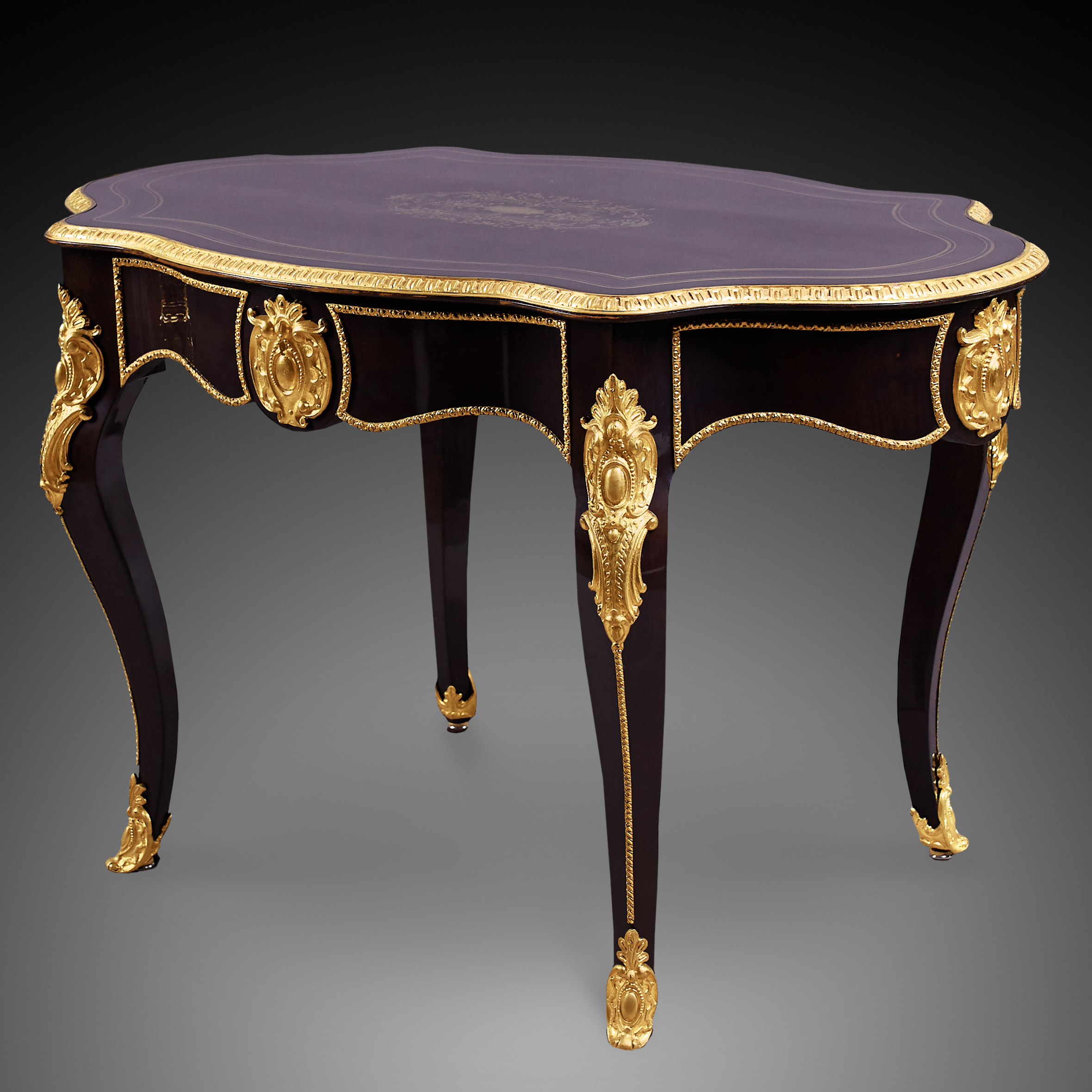
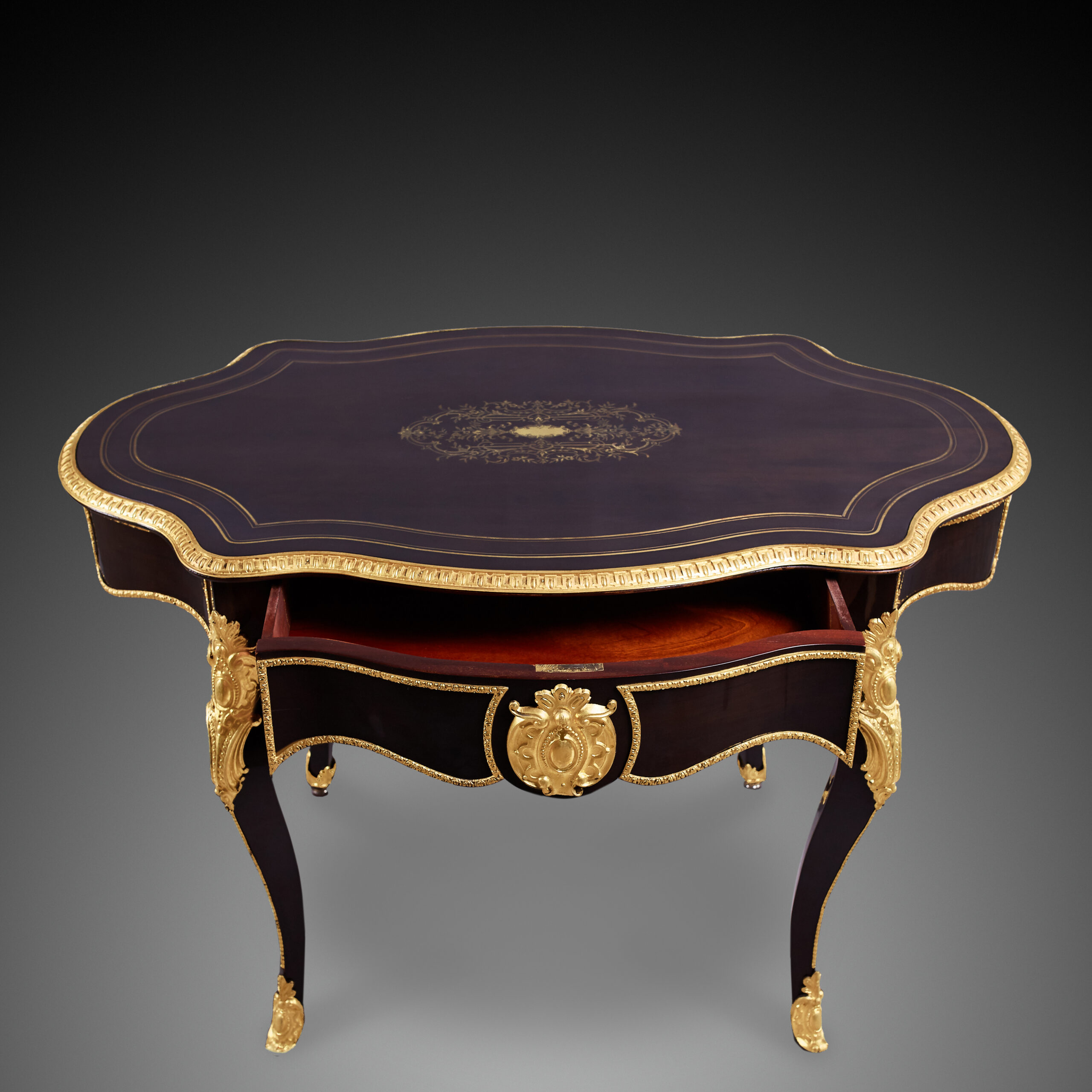
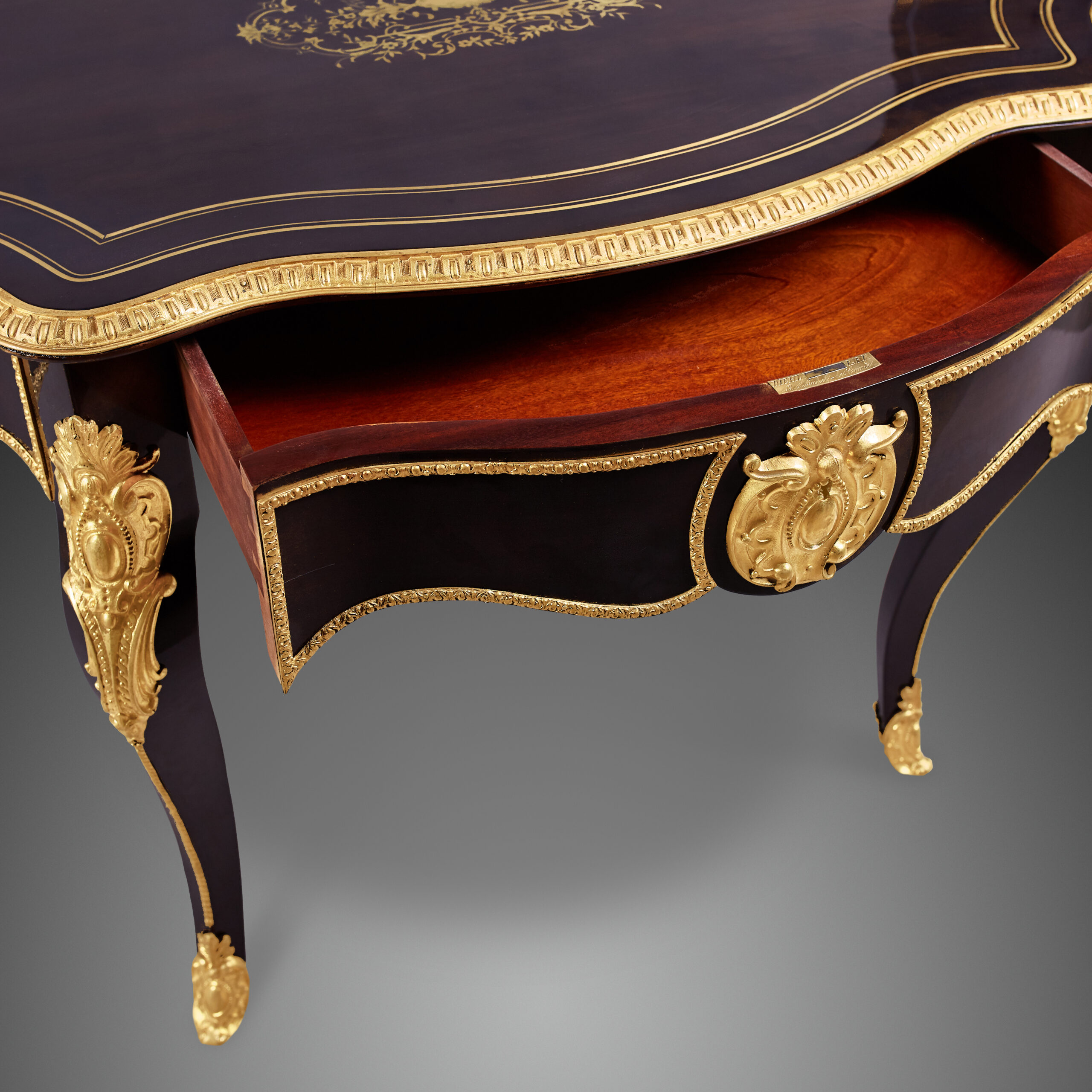
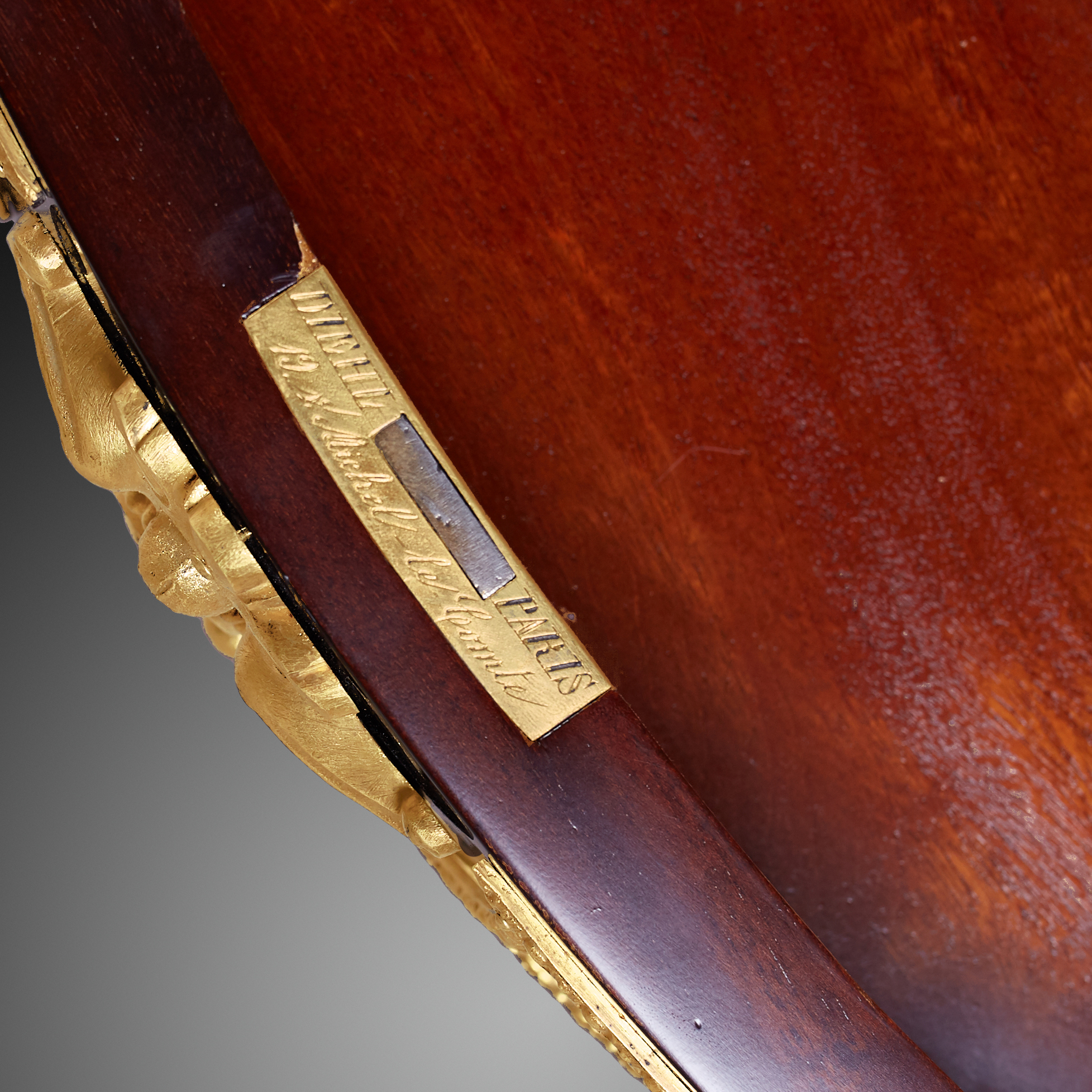
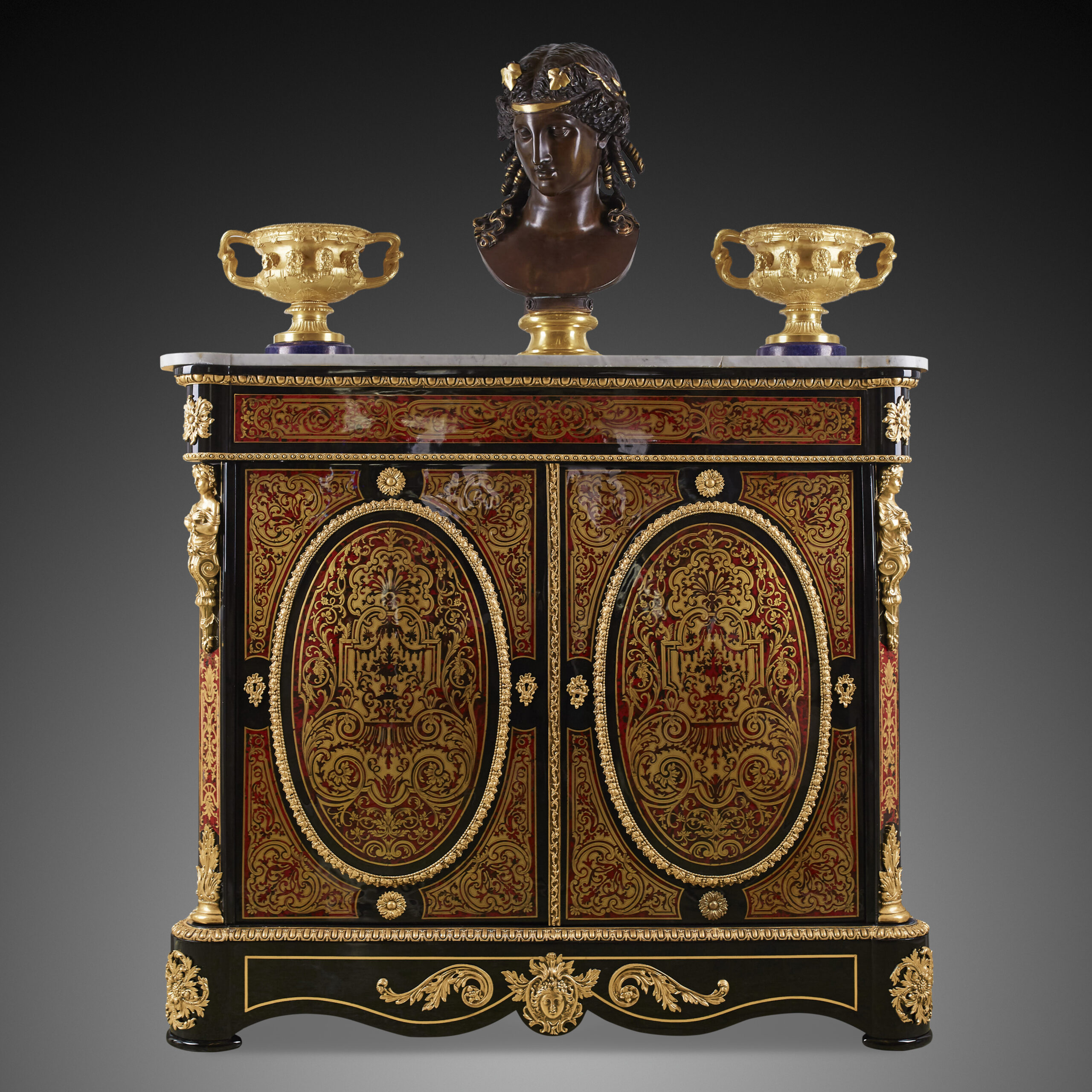
This exceptionally beautiful desk is a testament to the exquisite craftsmanship of the French 19th Century Napoleon III Period, and is attributed to the celebrated ébéniste Charles-Guillaume Diehl, whose workshop was located at 19 Rue Michel-le-Comte in Paris. The piece is a perfect example of the era’s Louis XV revival style, combining elegant curves with meticulous decoration.
Materials and Craftsmanship:
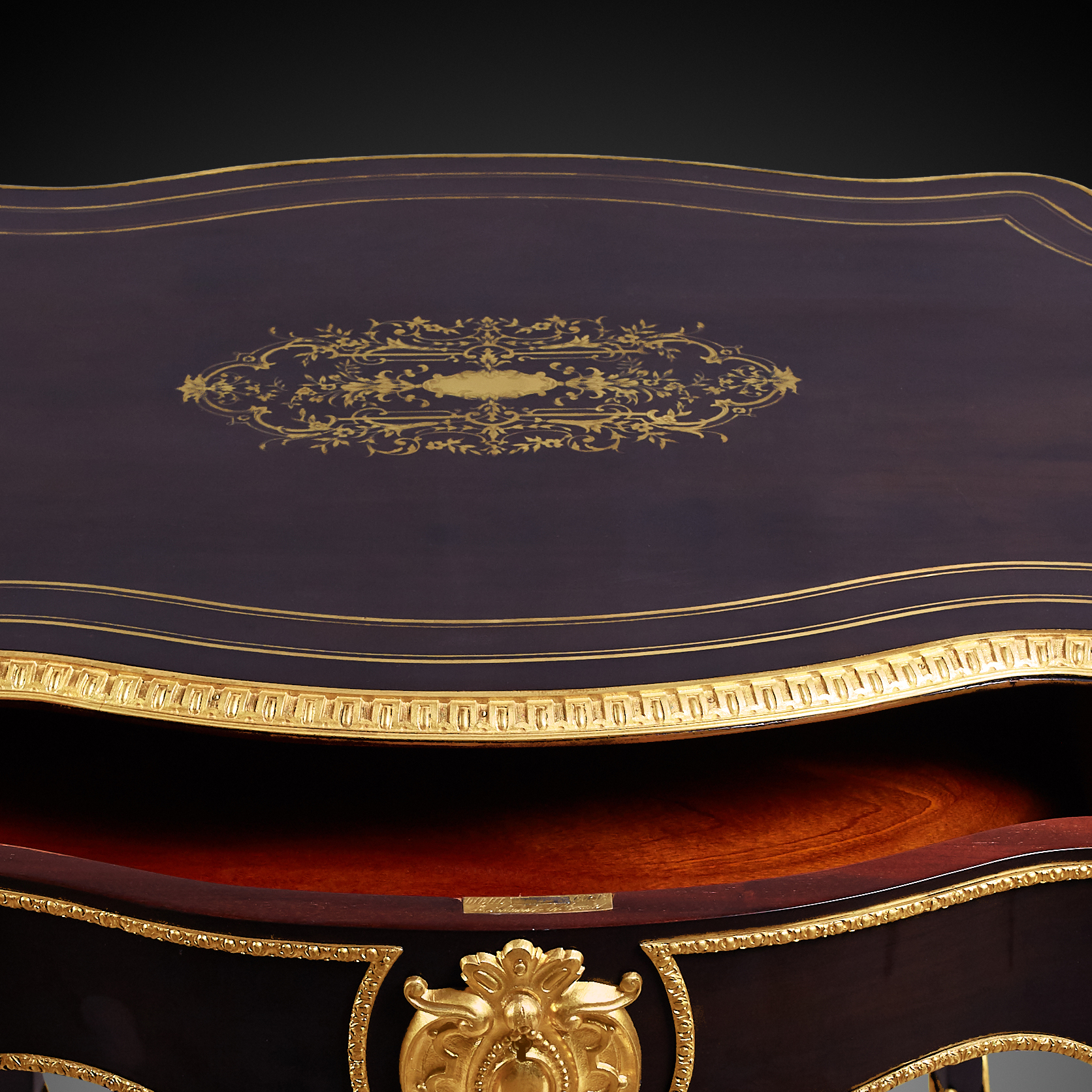
The desk is constructed from ebonized wood, which provides a rich, dark finish that beautifully contrasts with the intricate ornamentation. The piece is embellished with Boulle-style marquetry, featuring fine inlays that create a sophisticated visual texture. The desk stands on four graceful cabriole legs and is heavily adorned with finely cast and chased gilt-bronze (ormolu) mounts, a hallmark of high-quality Parisian furniture from the period. The top of the desk features a central leather or velvet writing surface.
Decorative Elements:
The desk is rich with a variety of decorative motifs:
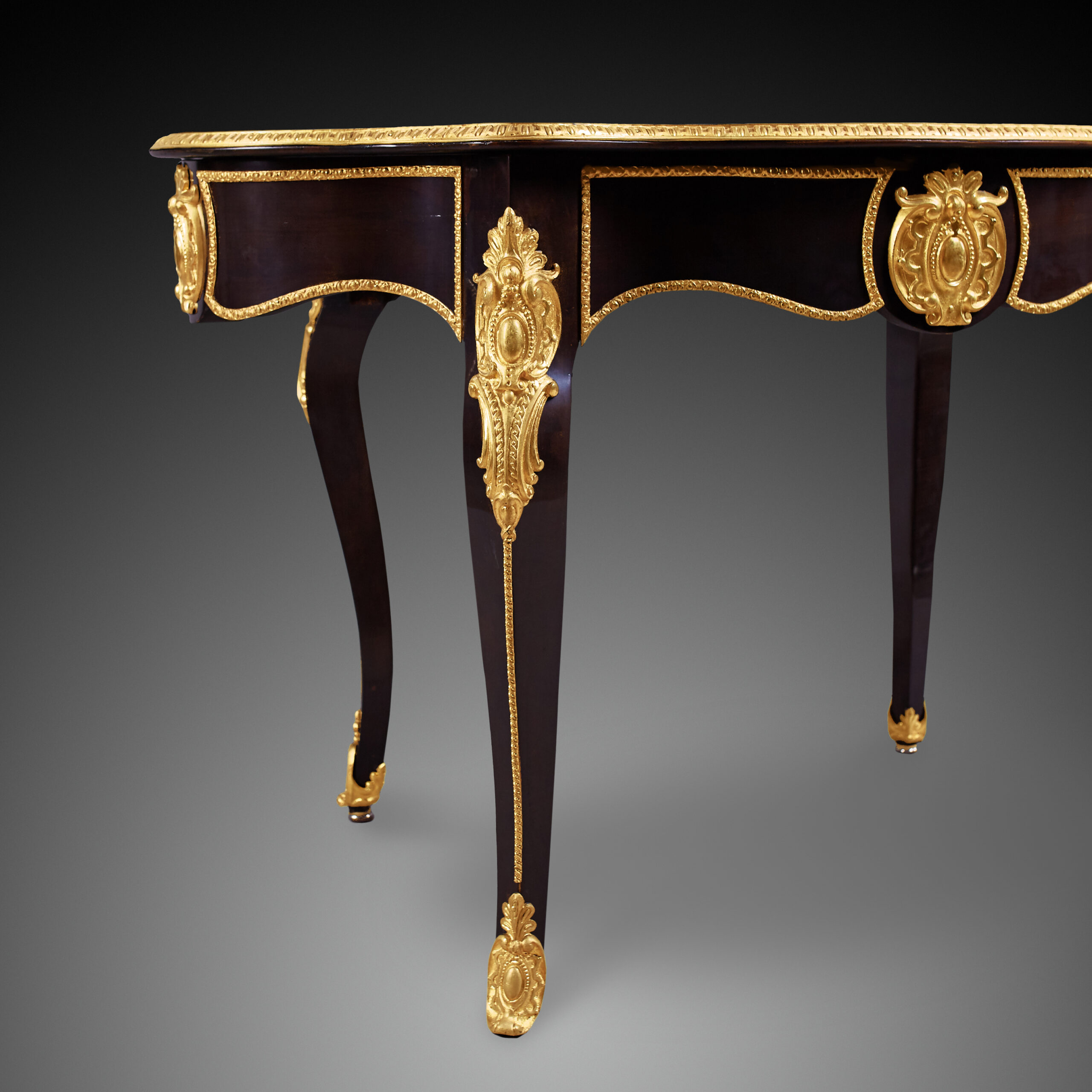
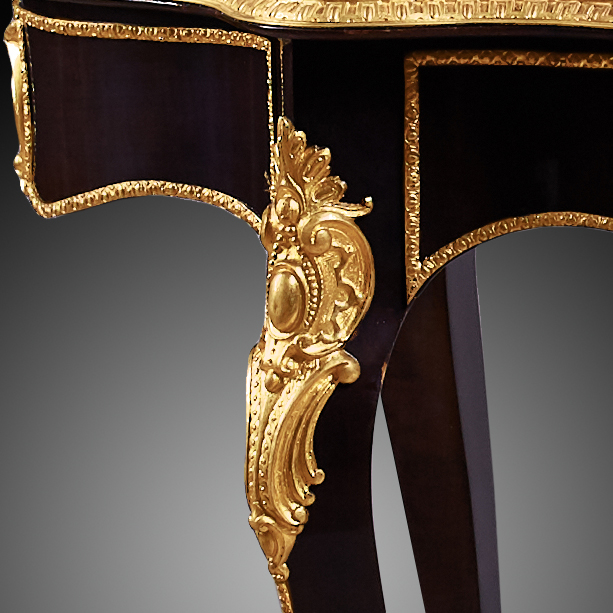
Gilt-Bronze Mounts: The frieze, apron, and legs are framed by extensive ormolu mounts that feature flowing scrolls, rocaille shells, and foliage. A prominent central classical mask adorns the front apron.
Marquetry: The frieze is decorated with intricate Boulle-style inlay, while the legs also feature decorative marquetry panels.
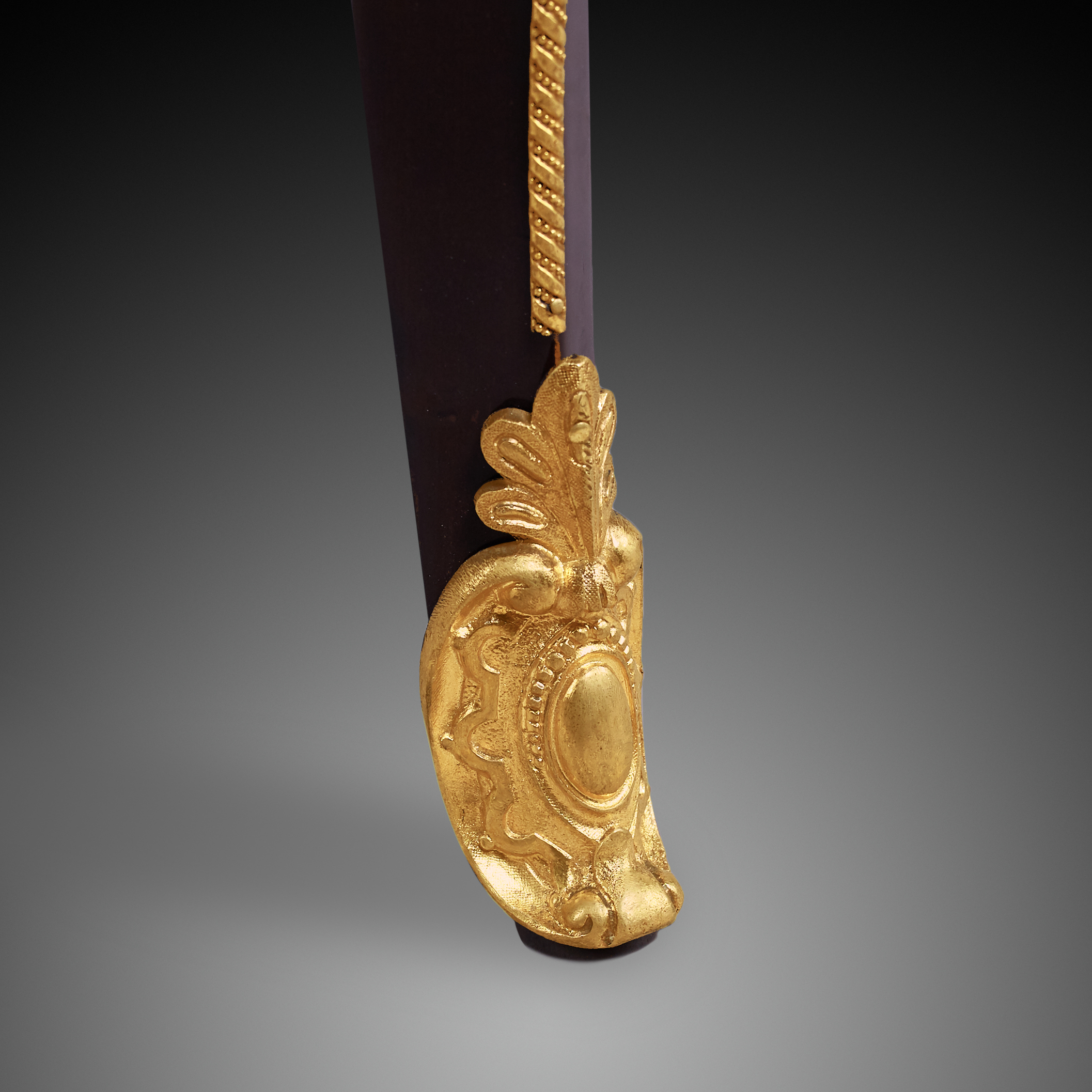
Cabriole Legs: The legs are a key decorative element, adorned with ornate ormolu trails that follow their elegant curve and terminate in finely cast sabots.
Writing Surface: The oval top has a central writing surface with a tooled brass border, indicating its function.
Historical Context:
Charles-Guillaume Diehl (1811-1885) was one of the most prominent and celebrated ébénistes of the Napoleon III period, known for his high-quality pieces that often blended revival styles with impeccable craftsmanship. This desk, with its opulent materials and detailed ornamentation, is a perfect example of the kind of fashionable and luxurious furniture produced for the wealthy clientele of the Second Empire. It would have been a prized piece in a 19th-century salon or study, prized for its craftsmanship, historical character, and luxurious materials.