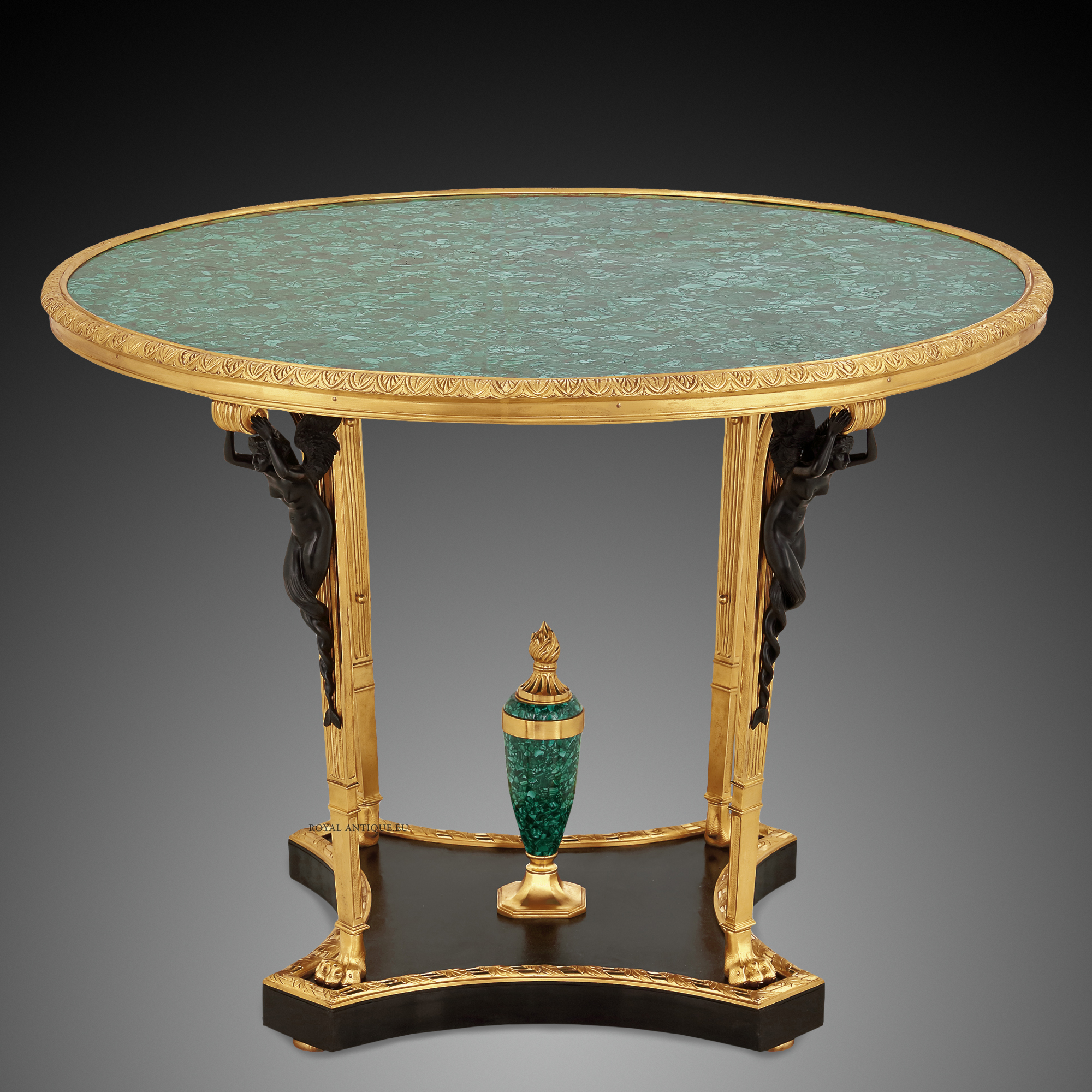
This magnificent French Empire centre table is a superb example of the highest quality Neoclassical furniture produced in Paris during the early 19th century, circa 1810–1820.
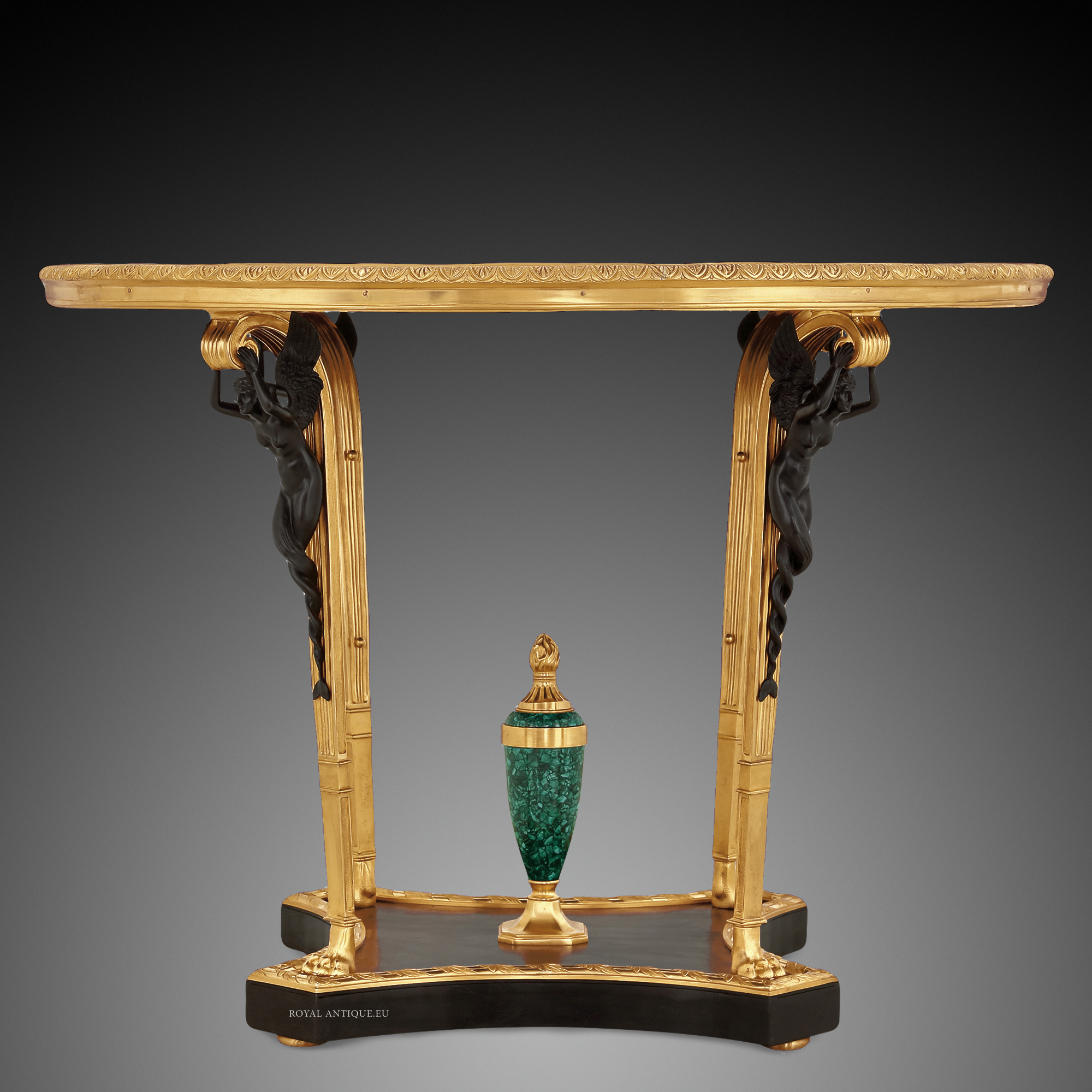
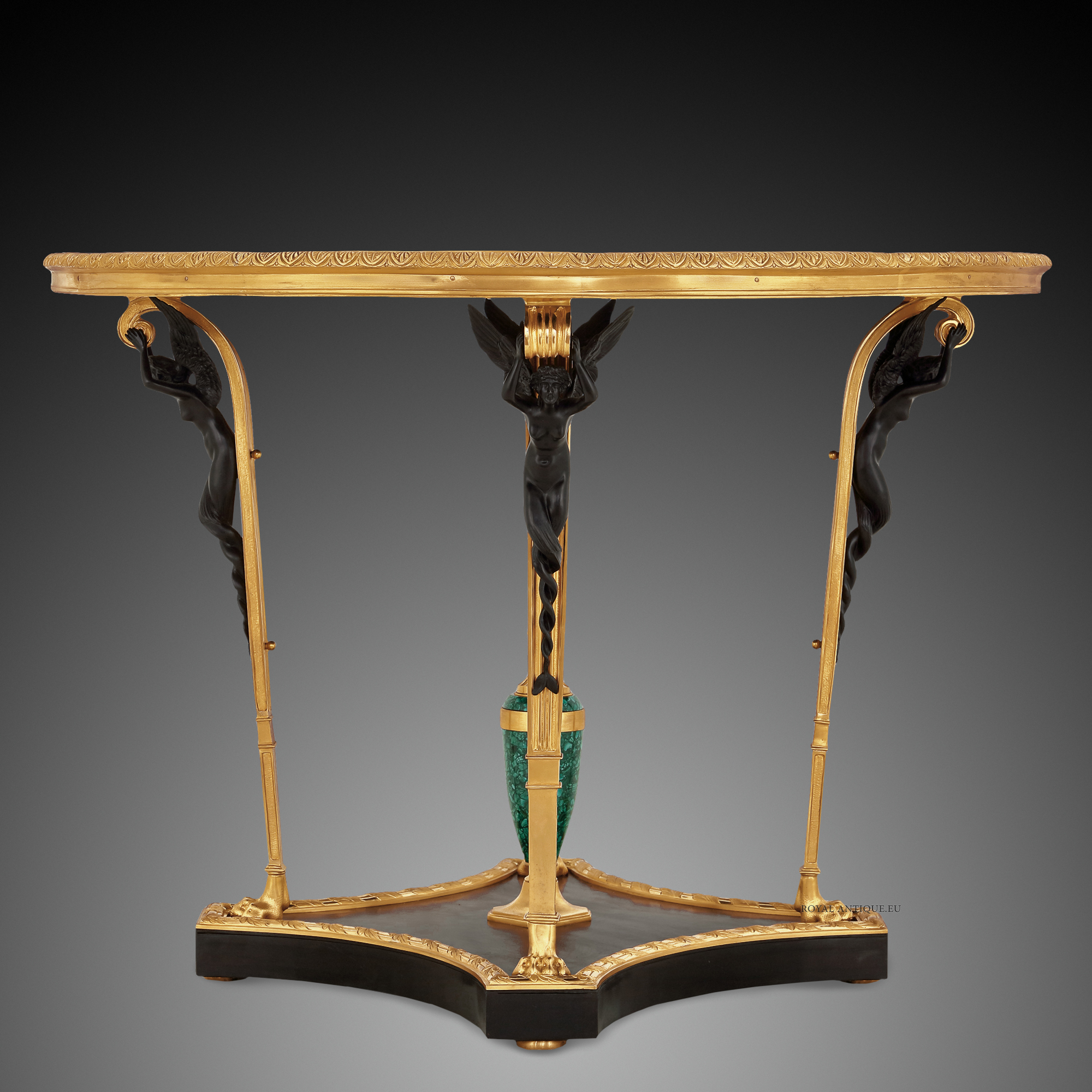
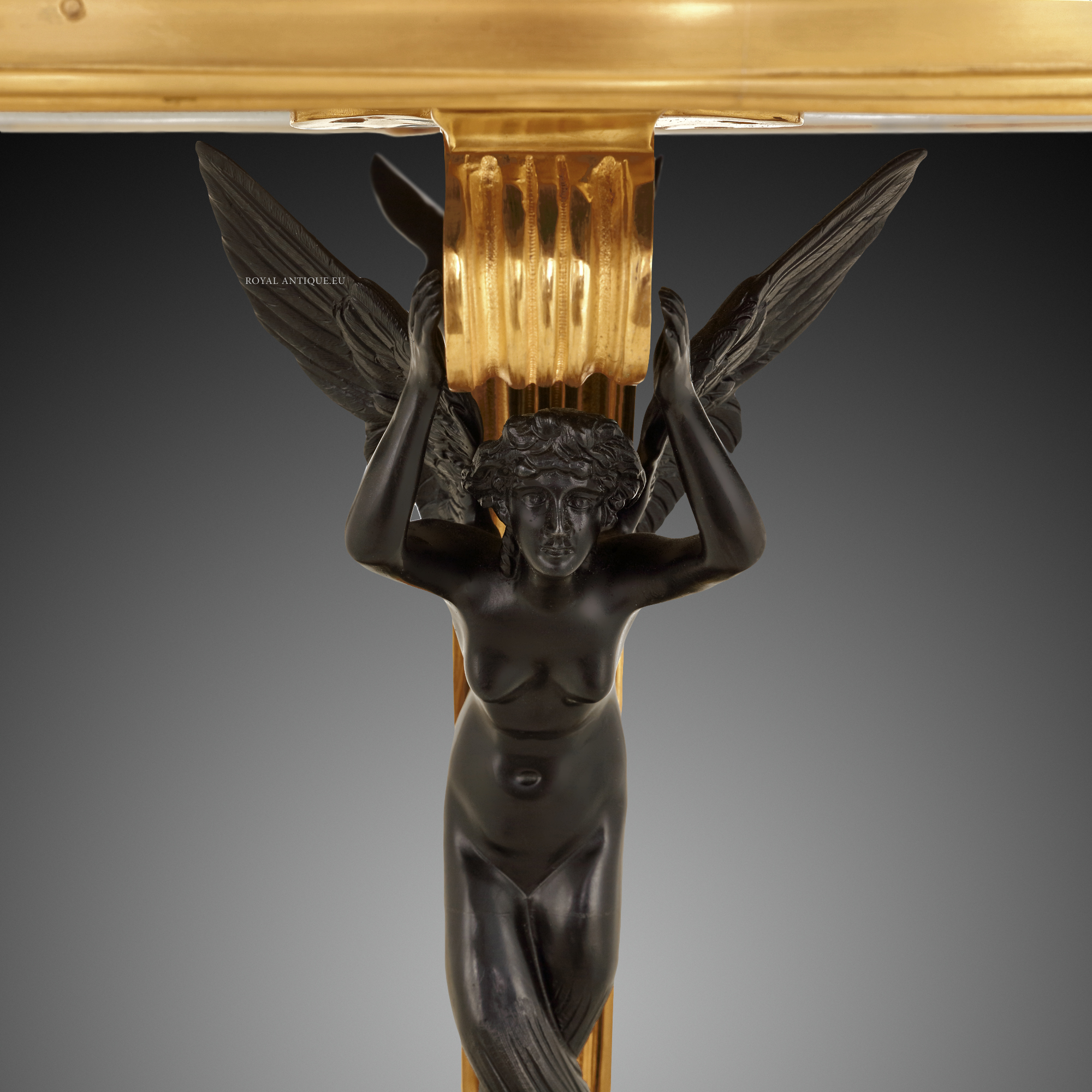
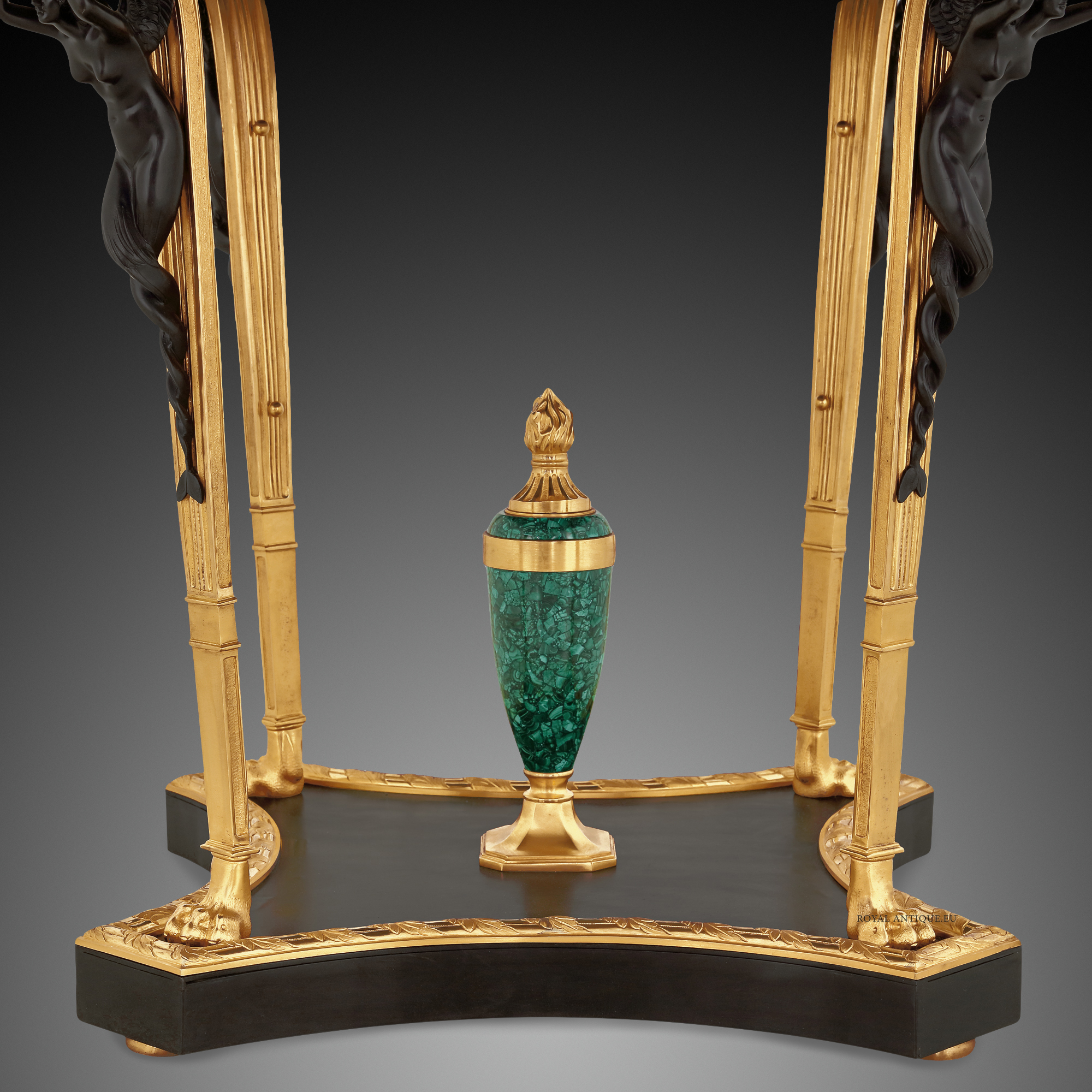
The table features a large circular top in pale green onyx or agate, framed by a finely chased gilt bronze gallery with a repeating Greek key and palmette motif. The support is particularly striking: four elegant female caryatid figures in gilt bronze stand gracefully around the circumference, each holding a floral garland. These figures are modelled with classical dignity and beautifully detailed drapery that falls in soft, naturalistic folds.
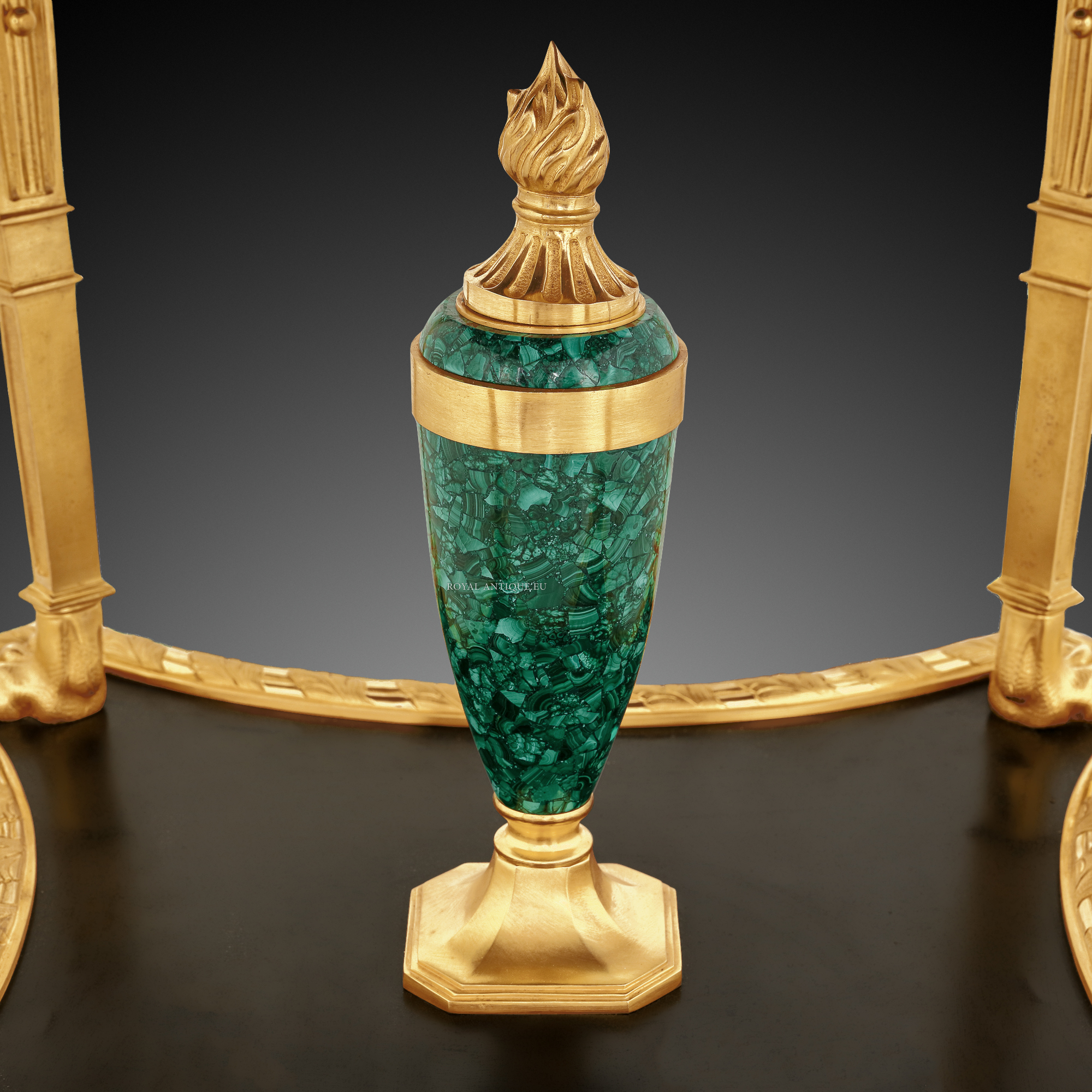
Between the caryatids, a central gilt bronze urn rests on a smaller circular malachite platform, adding both structural strength and decorative harmony to the composition. The whole structure is raised on a hexagonal gilt bronze base with black marble corners, giving the table a light yet monumental presence.
This table perfectly embodies the pure spirit of the Empire style under Napoleon Bonaparte. After the Revolution, French designers deliberately returned to the architectural vocabulary and ideals of ancient Greece and Rome. The use of caryatids, Greek key ornament, and noble materials such as onyx and malachite was intended to express imperial power, order, permanence, and refined classical taste. Such grand centre tables were commissioned for the salons and galleries of palaces, ministries, and the homes of the Napoleonic elite, where they served as important focal points for displaying clocks, candelabra, or fine porcelain.
When placed in a room, the table creates an immediate impression of dignity and opulence. The pale green onyx top glows softly, the gilt bronze caryatids catch the light with quiet brilliance, and the malachite platform adds a rich, deep colour accent. Its perfect proportions and sculptural quality make it an ideal centrepiece in any Neoclassical interior.
This centre table represents the pinnacle of French Empire furniture design, where technical mastery in bronze casting and stone veneering meets flawless classical proportion and symbolic refinement. Its exceptional quality and pure stylistic coherence make it a highly desirable addition to any serious collection of early 19th-century French decorative arts.