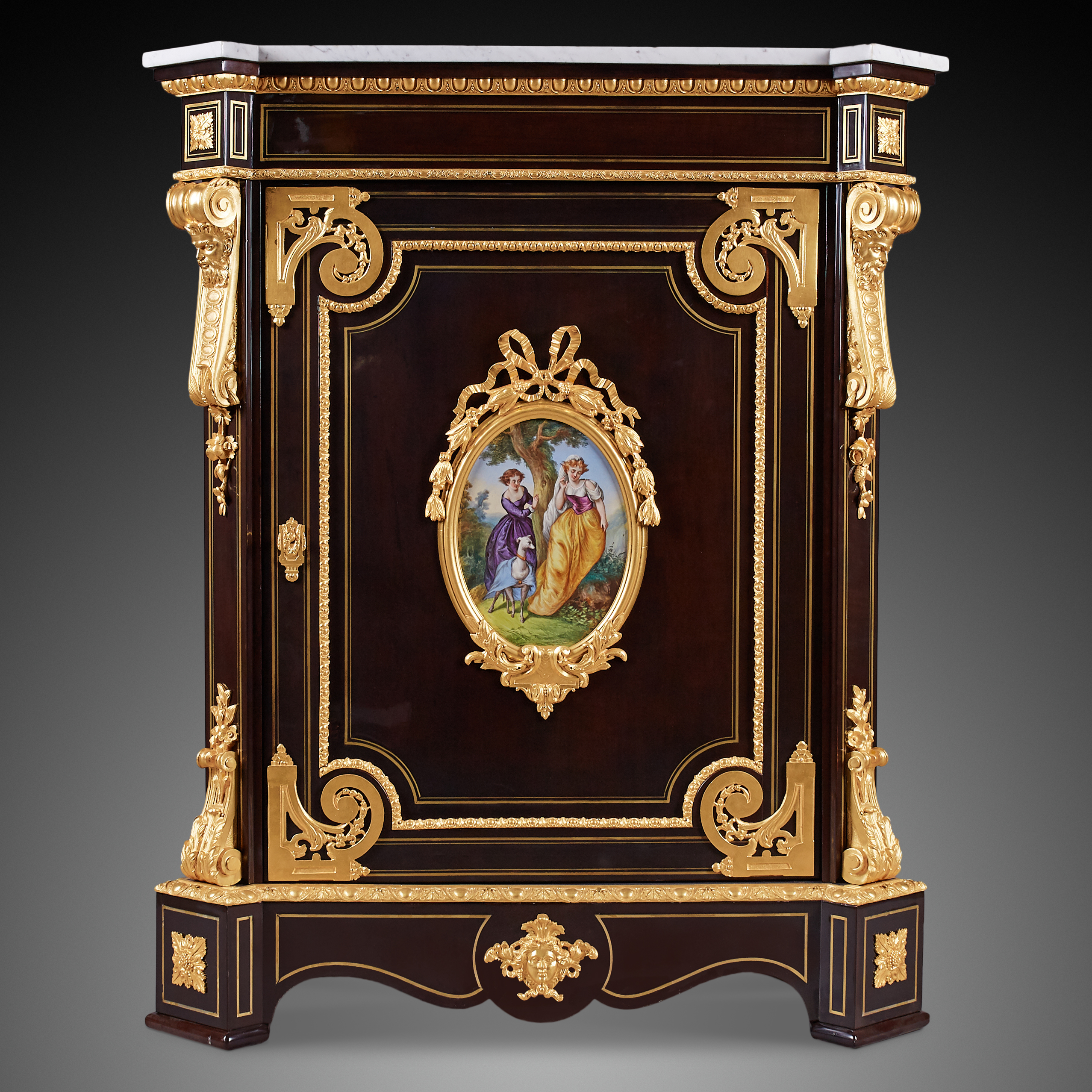
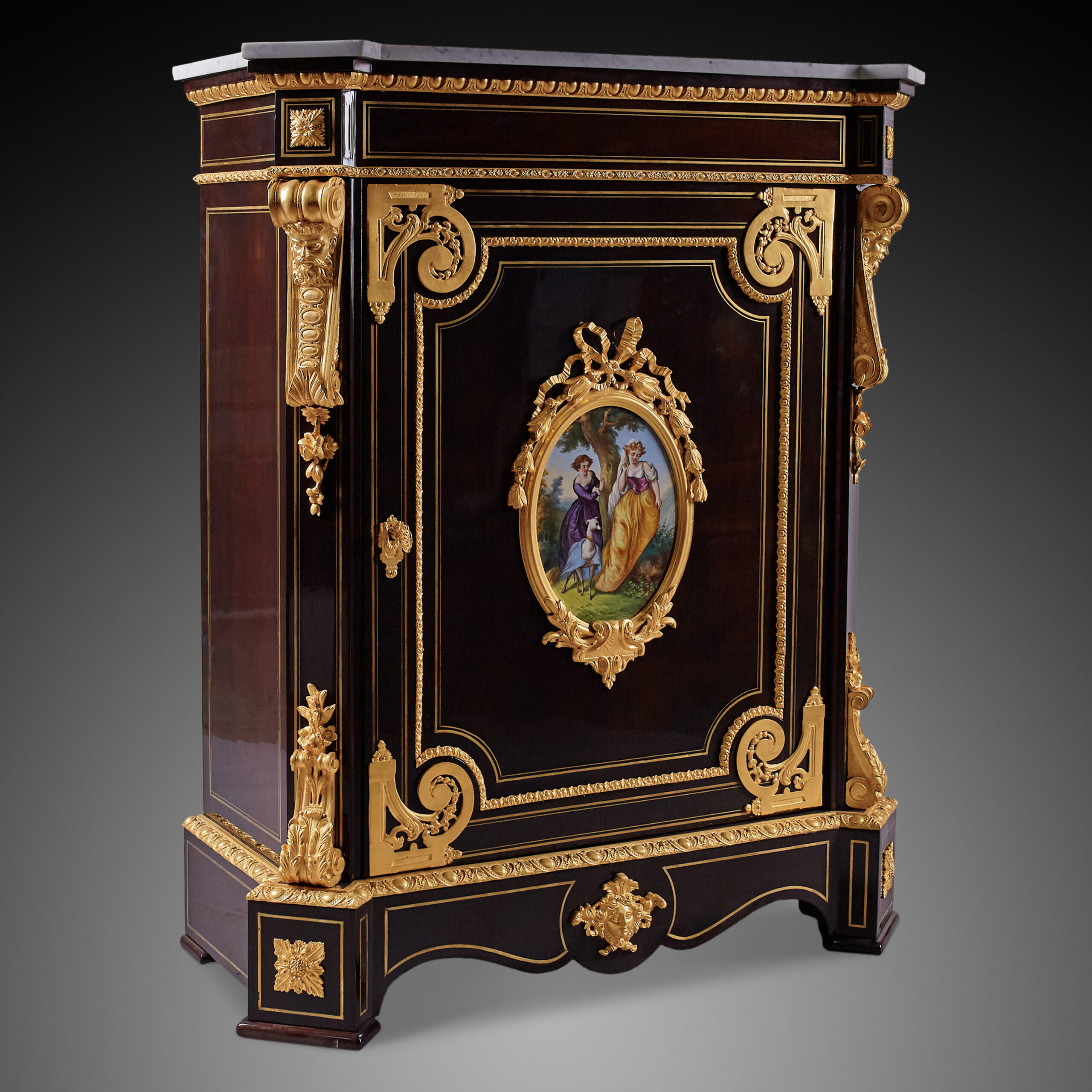
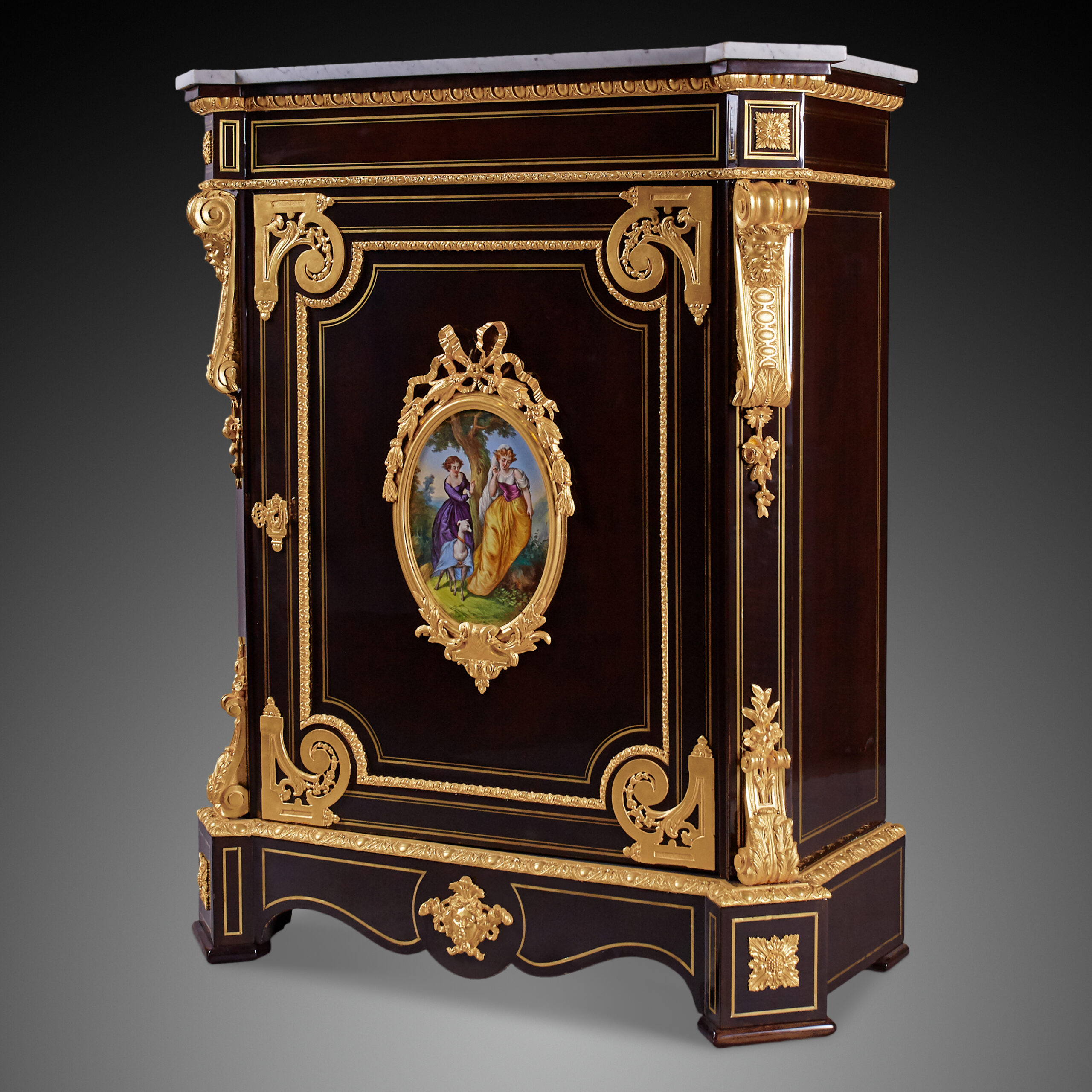
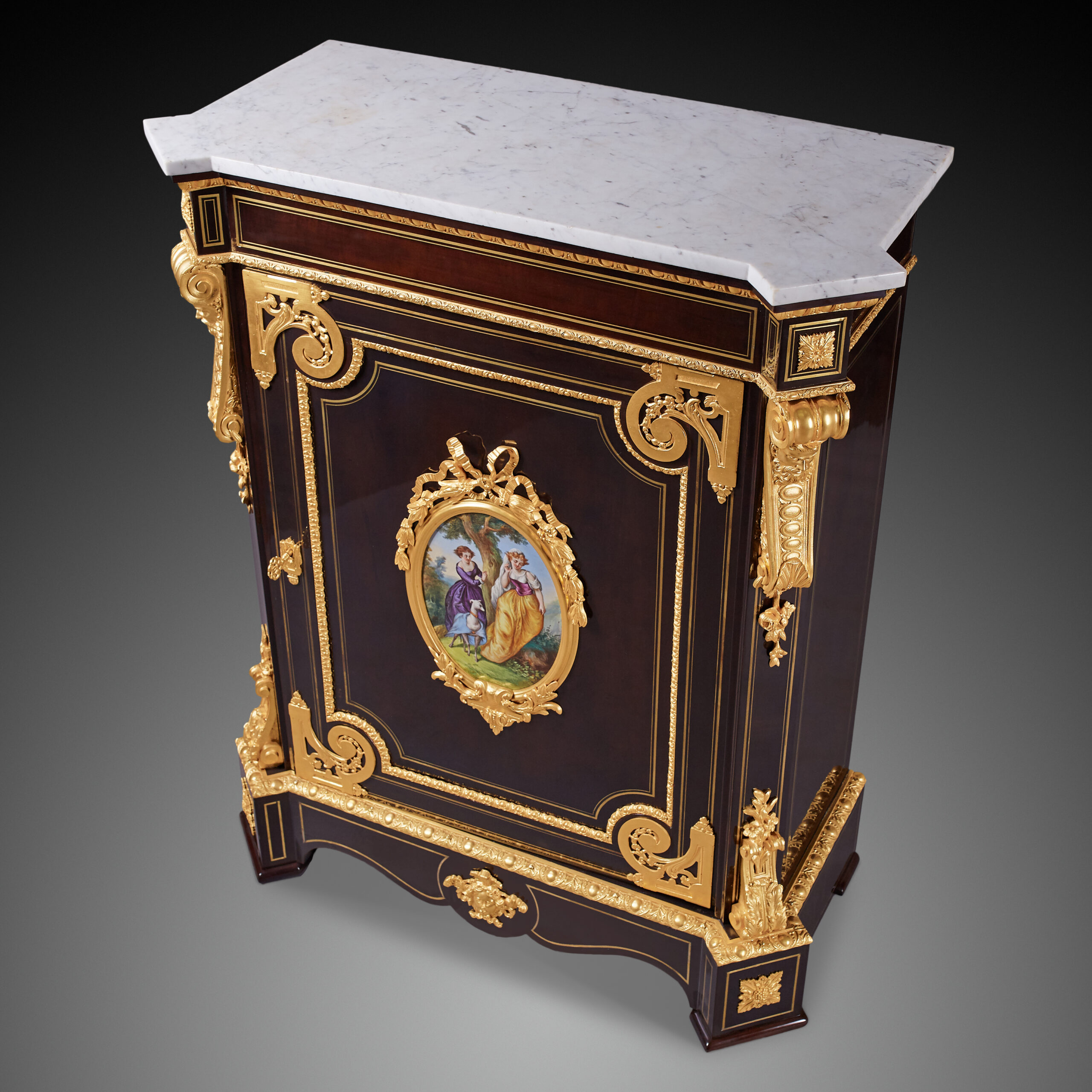
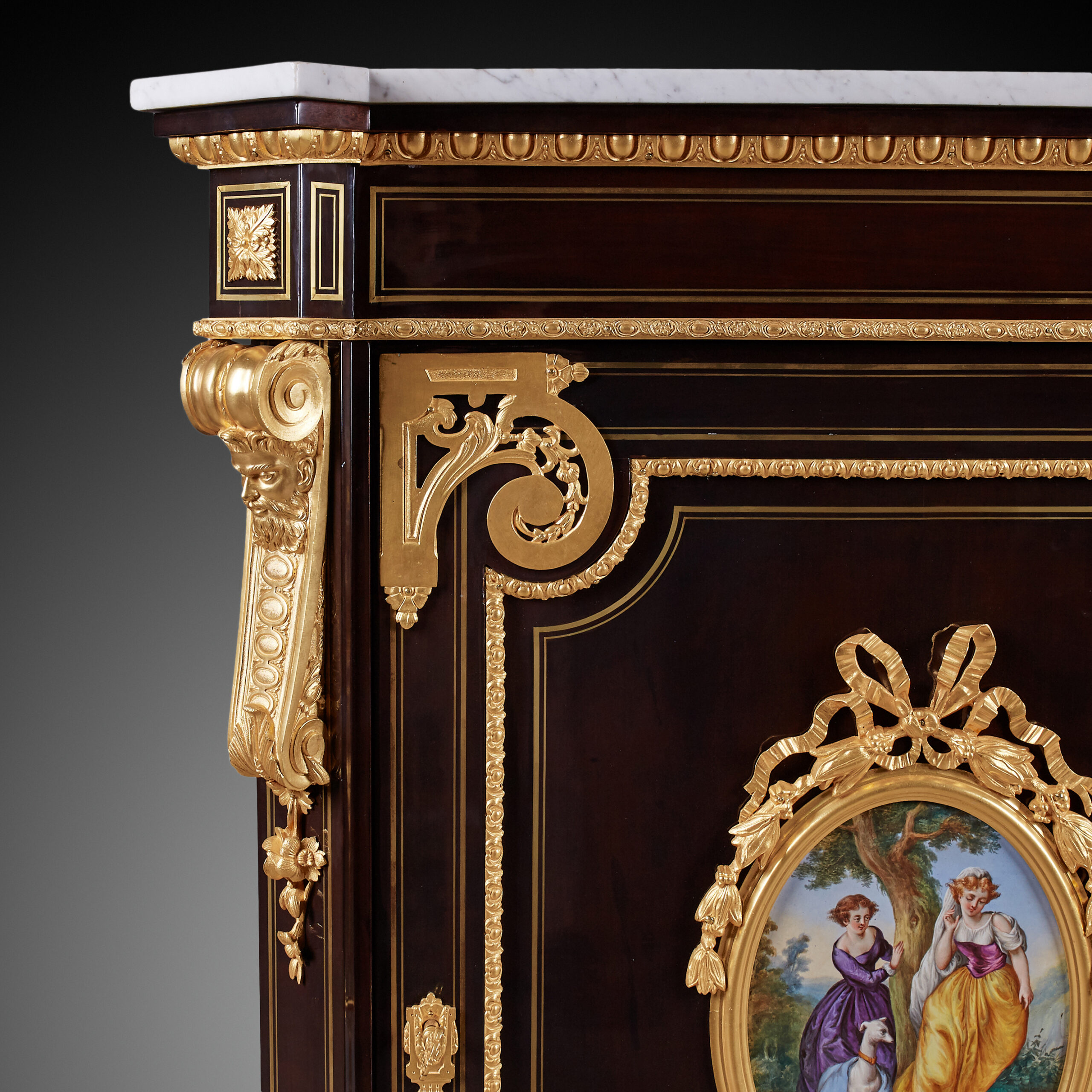
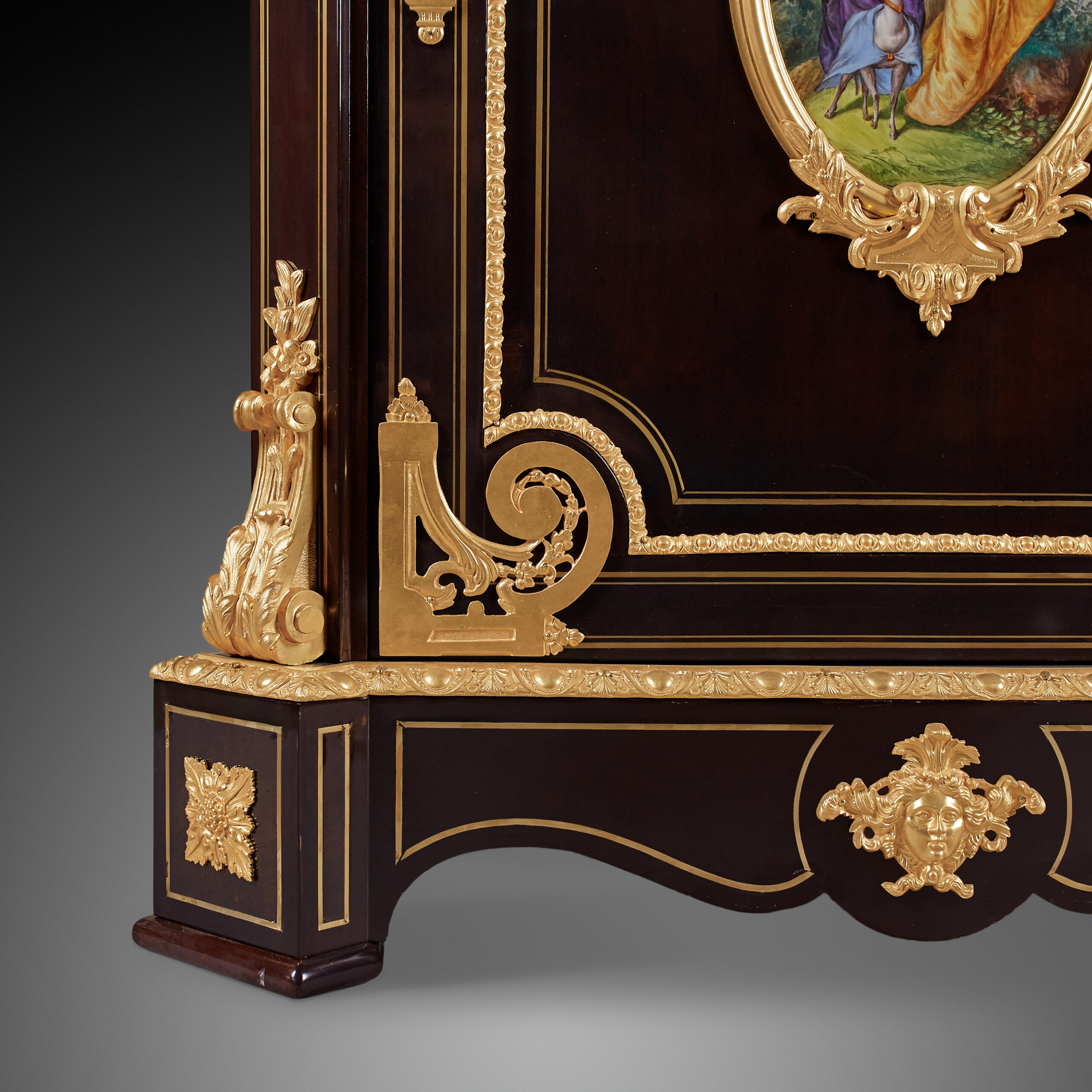
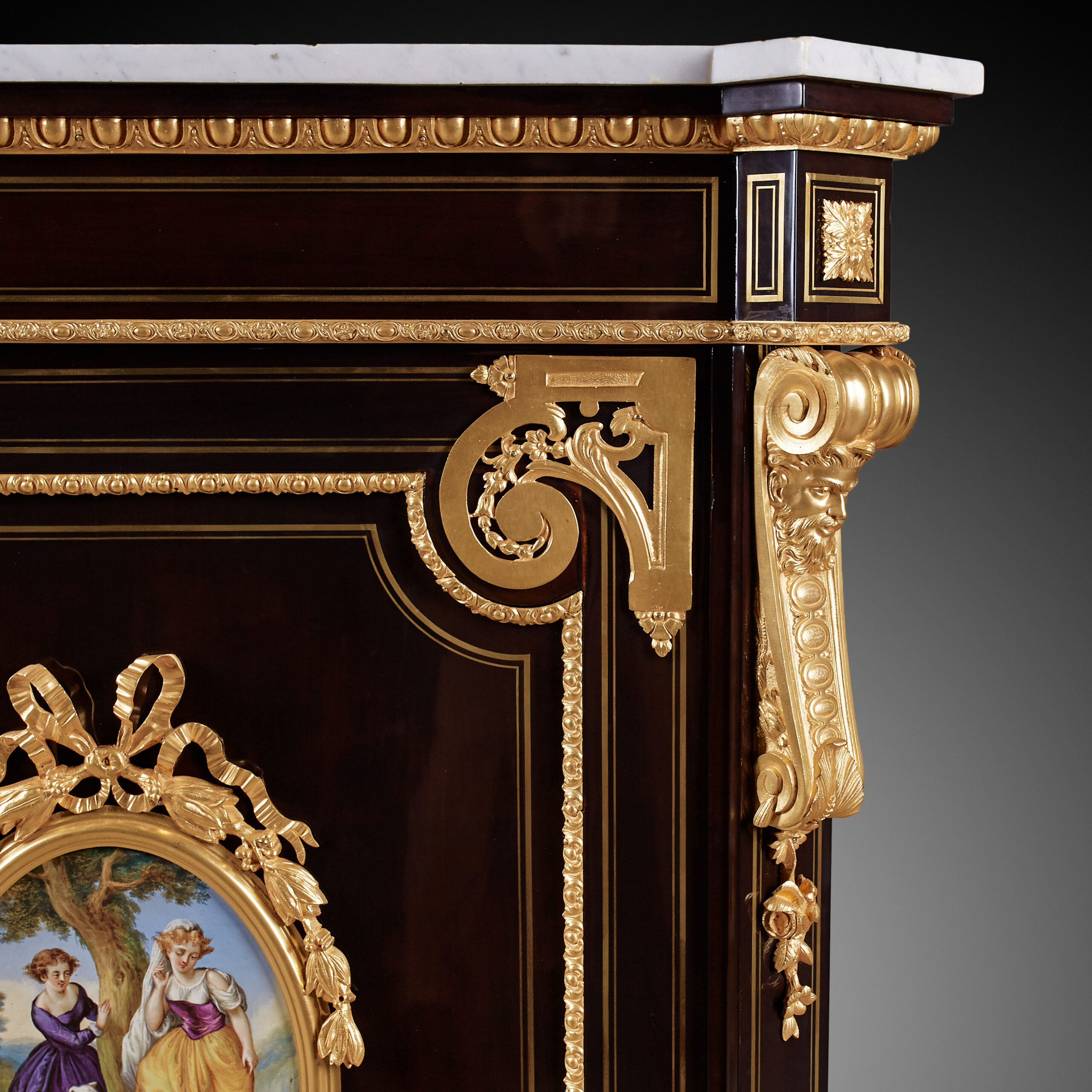
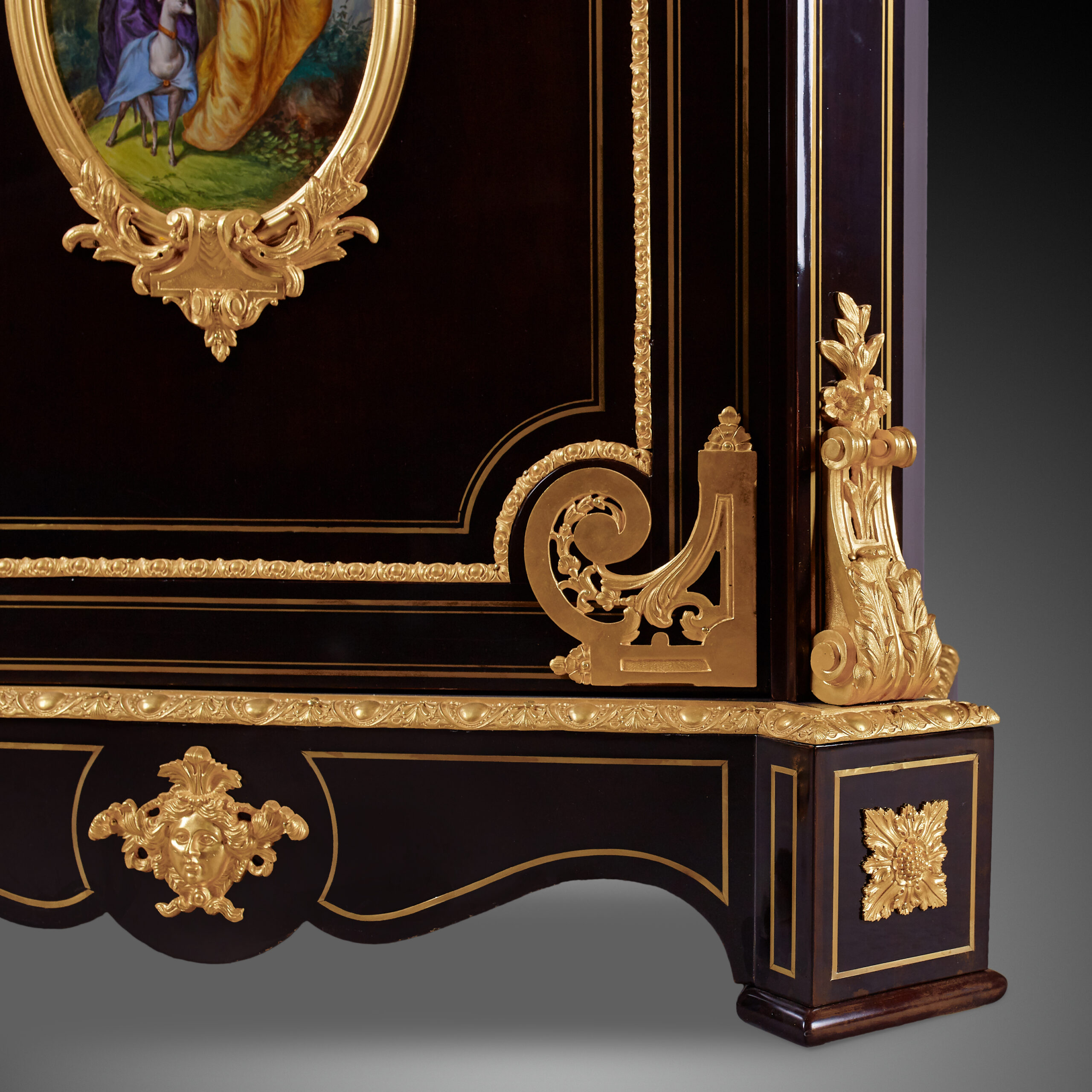
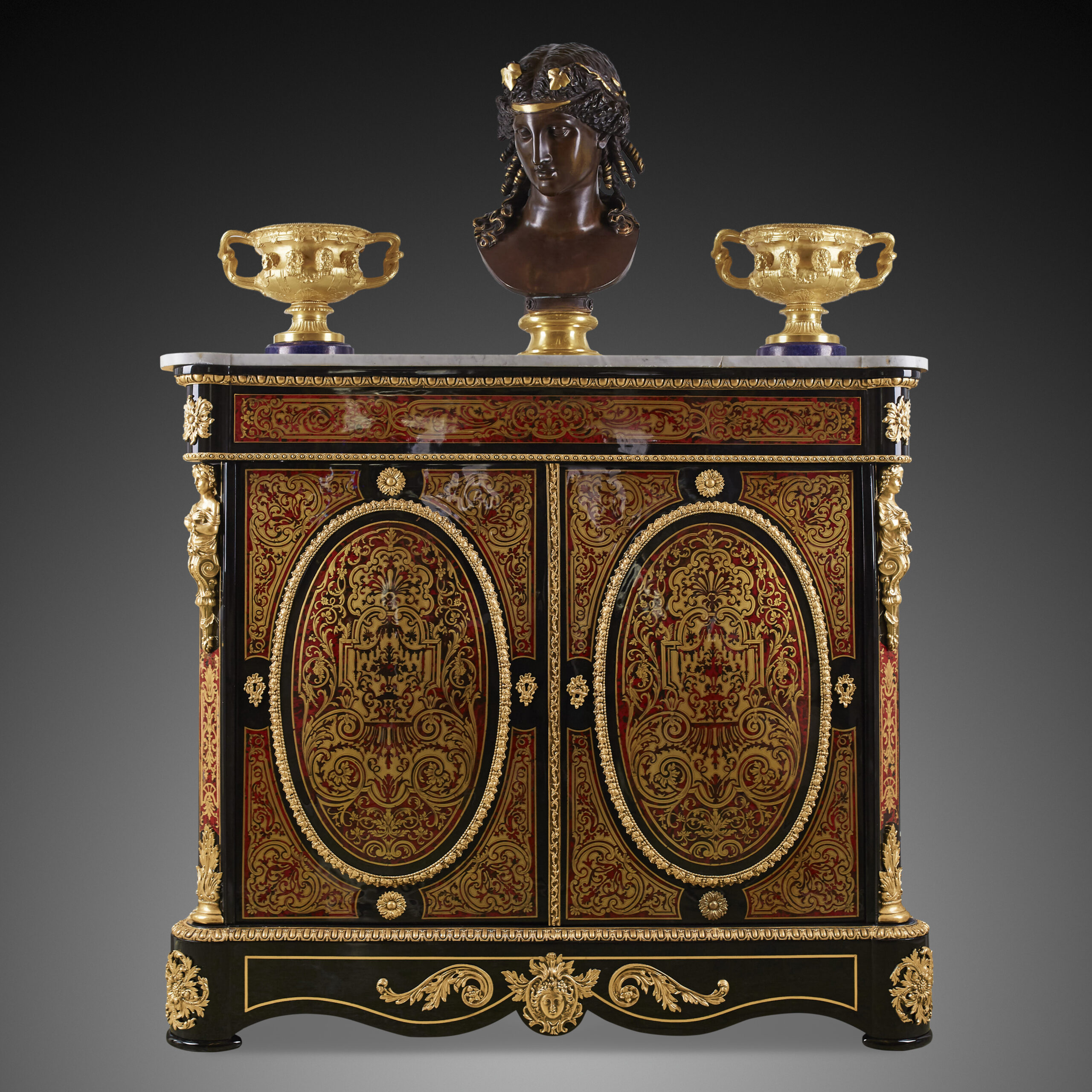
This magnificent French cabinet is a superb and highly luxurious example of the Napoleon III revival of the Louis XIV Boulle style, dating from circa 1850–1870.
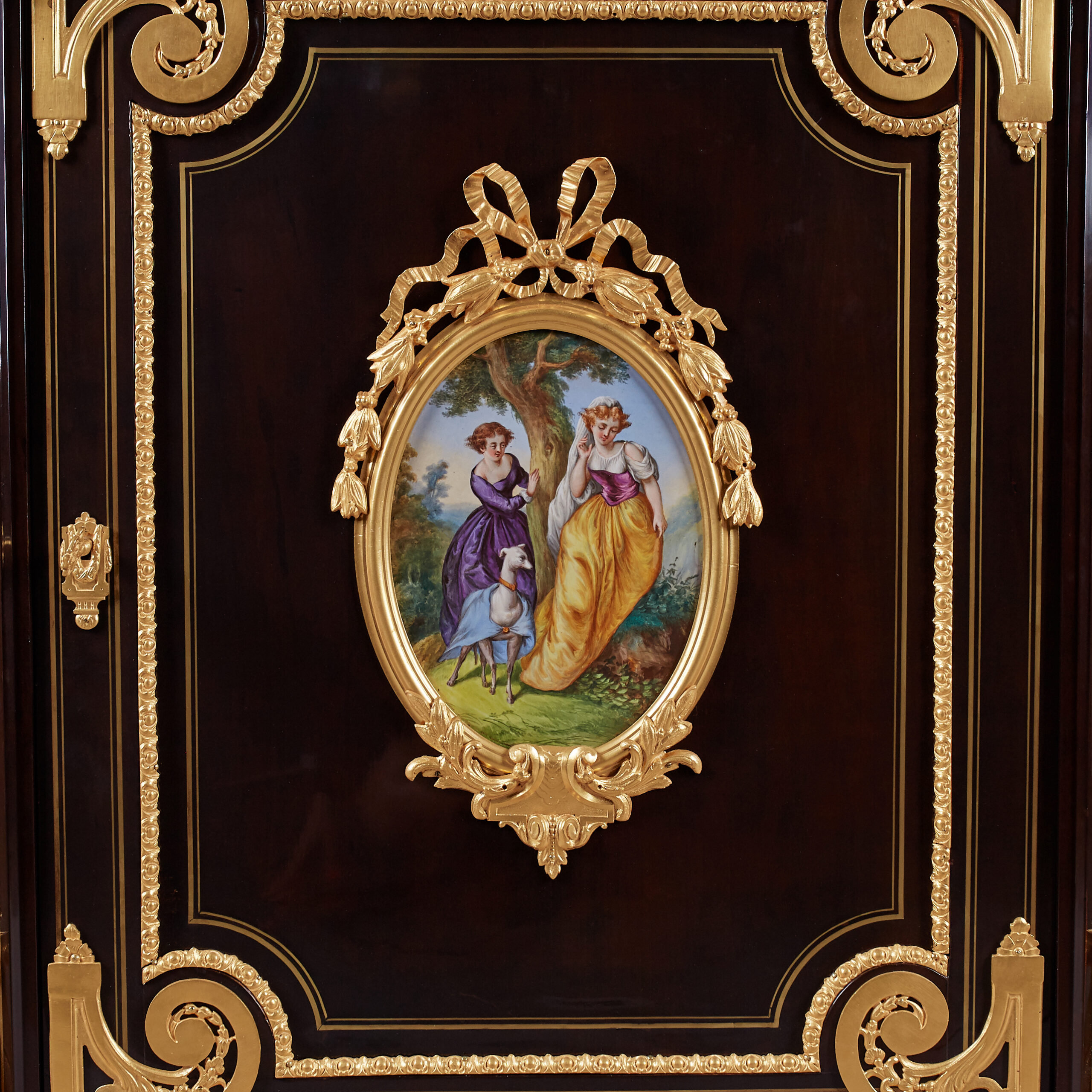
Executed with exceptional quality, the cabinet is veneered in rich ebony and features a large central door with a fine pictorial porcelain plaque set within an elaborate gilt bronze frame. The oval plaque depicts a charming 18th-century pastoral scene with figures in elegant period dress in a garden landscape, painted in the style of Watteau or Boucher. This delicate porcelain panel is surrounded by dense, symmetrical brass and tortoiseshell marquetry in the classic Boulle technique, creating a rich contrast between the figurative centre and the geometric background.
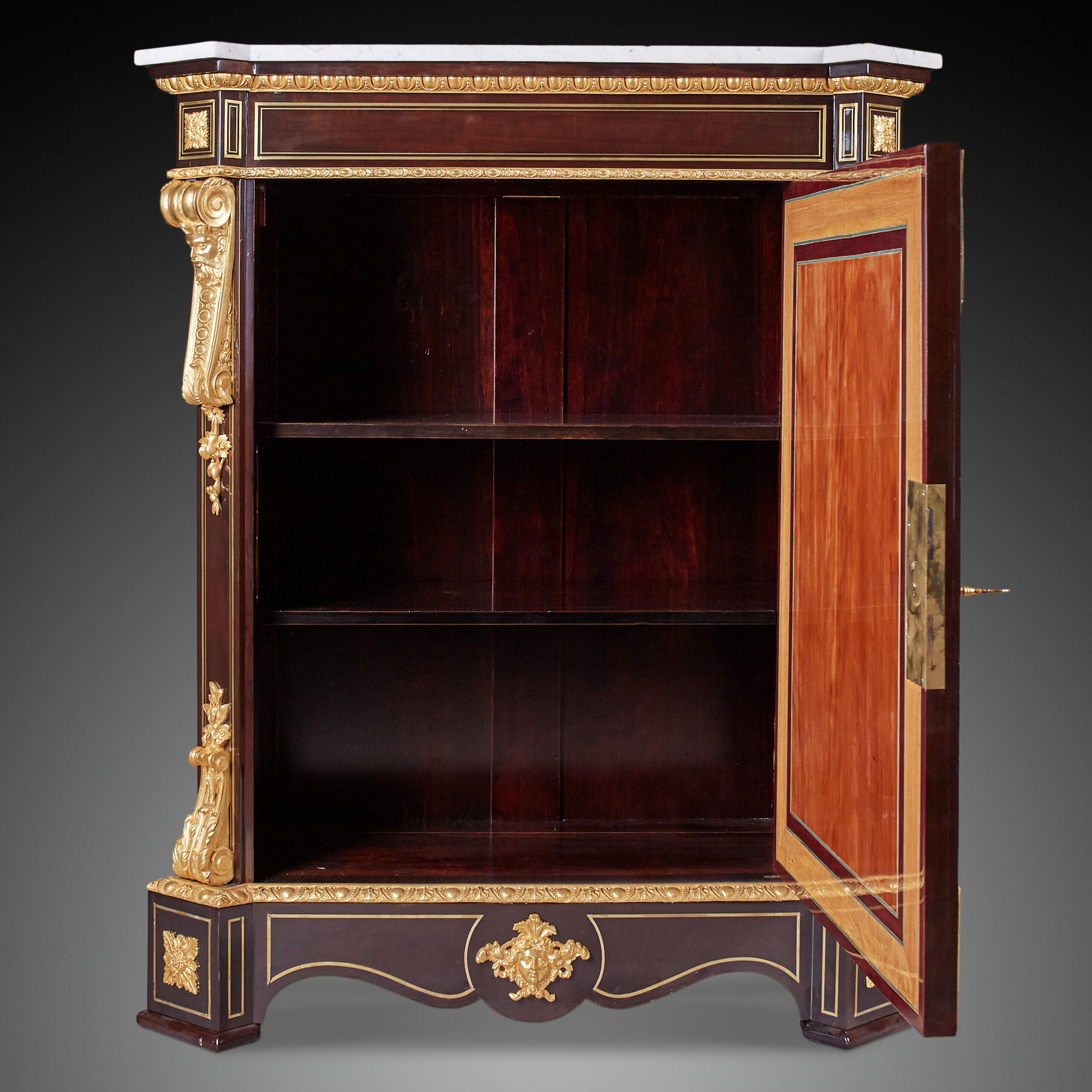
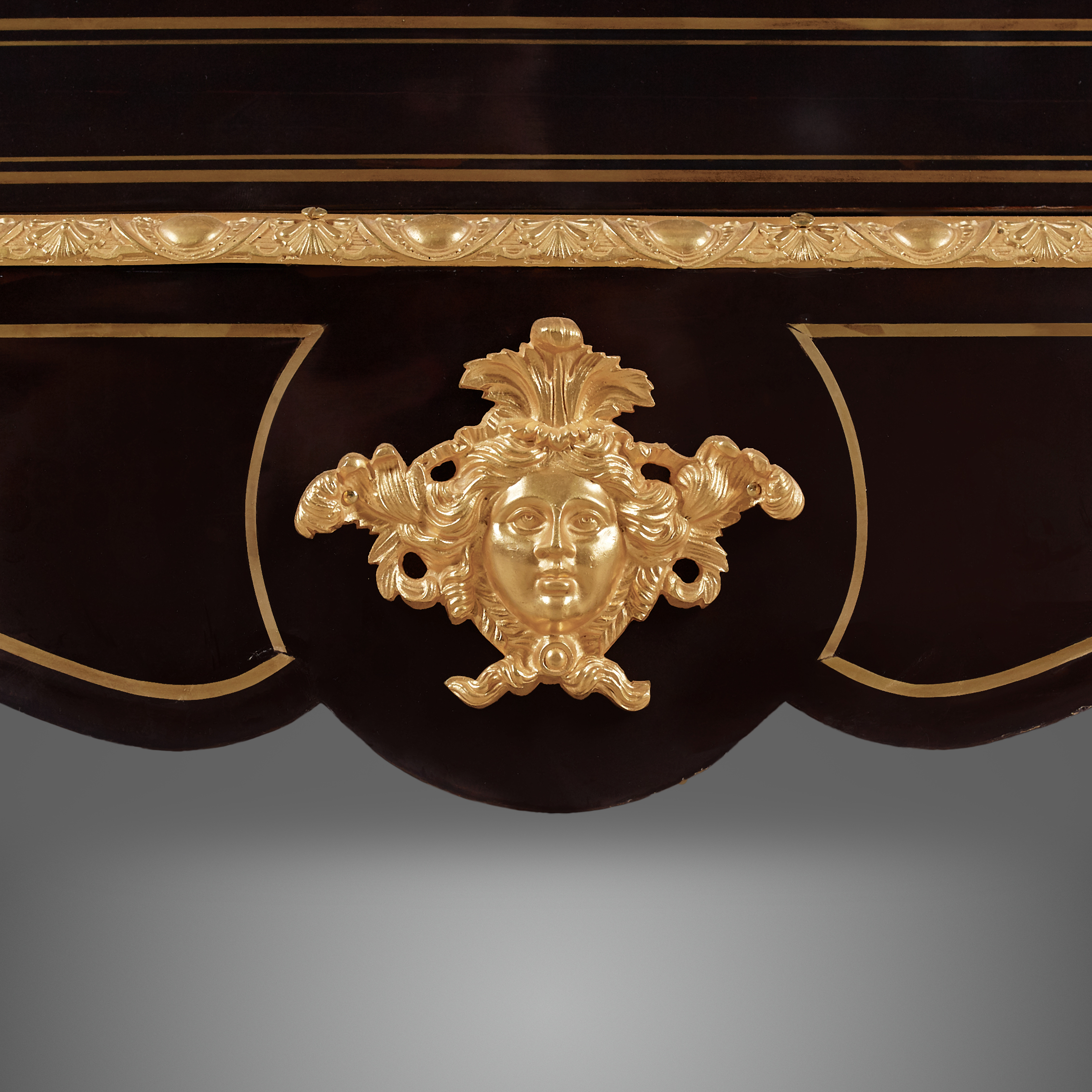
The corners are accentuated by finely modelled gilt bronze caryatid figures and scrolling acanthus mounts, while the base and cornice feature elegant mouldings, acanthus scrolls, and repeating Greek key motifs. The cabinet stands on a shaped base with additional gilt bronze ornamentation and is crowned with a white marble top, adding a cool, classical contrast to the rich warmth of the marquetry and ormolu.
This piece perfectly reflects the eclectic and opulent taste of the Second Empire. During the reign of Napoleon III, the revival of André-Charles Boulle’s techniques, combined with the insertion of fine Sèvres-style porcelain plaques, became extremely fashionable among the French aristocracy and wealthy bourgeoisie. These cabinets were prized not only for their technical brilliance but also for their association with the grandeur and refined elegance of the French royal past.
The combination of deep black ebony, warm brass and tortoiseshell inlays, the delicate painted porcelain plaque, and luminous gilt bronze mounts creates a rich, jewel-like effect that changes beautifully with the light. The quality of the marquetry, the precision of the chasing, and the overall architectural harmony mark this cabinet as the work of one of the leading Parisian ateliers of the period.
When placed in a grand salon, library, or formal room, this cabinet serves both as important storage furniture and as a striking decorative statement. Its scale, materials, and refined pictorial element make it an impressive piece that embodies the luxurious historicism of the Napoleon III era.
This is a truly exceptional example of 19th-century French ébénisterie, where technical mastery meets historical revival, pictorial elegance, and opulent decoration. Its quality and stylistic purity make it a highly desirable addition to any serious collection of Napoleon III decorative arts or Boulle revival